Crispy Kimchi Pancake Recipe: The Secret to Crunchy Kimchi Jeon
Kimchi pancakes may look simple, but they can easily turn soggy in the center or tear when flipped. The key is well-fermented kimchi, cold batter, plenty of oil, and spreading the batter thinly. Follow these four points and you can make kimchi jeon at home with crisp edges and a pleasantly chewy center, just like at a Korean pancake restaurant.

On rainy days, late nights, or whenever you need an easy side dish, kimchi jeon is often the first thing that comes to mind. You can make it with just leftover sour kimchi from the fridge, but the real difference comes down to the batter ratio and cooking temperature. If the kimchi has too much moisture, the pancake turns soggy quickly. If you overmix the batter, it becomes too chewy and loses its crisp texture.
This recipe is written for 2 to 3 medium pancakes. It uses both Korean pancake mix and frying mix, and the water should be very cold. If your kimchi is too sour, add a little sugar to balance the acidity. If you want it spicier, add Cheongyang chili peppers and extra red pepper powder.

Basic Information
| Dish Name | Kimchi Pancake, Kimchi Jeon |
|---|---|
| Yield | 2 to 3 medium pancakes |
| Cooking Time | About 20 minutes |
| Difficulty | Easy |
| Key Points | 1:1 ratio of pancake mix and frying mix, ice water, plenty of oil, spread thinly |
Quick Summary
For a crispy kimchi pancake, it is important not to make the batter too thick. Mix 1 cup of Korean pancake mix with 1 cup of frying mix, then add 1.5 to 2 cups of ice water until the batter flows easily. Do not knead or overmix it. Stir just until combined, heat a pan with plenty of oil, and spread the batter thinly so it cooks almost as if it is being shallow-fried. This brings out the crisp edges beautifully.
Ingredients
The Golden Batter Ratio
1 cup pancake mix + 1 cup frying mix + 1.5 to 2 cups ice water
Using only pancake mix is convenient because it is already seasoned, but the texture can become a little heavy. Adding frying mix helps the edges crisp up better. Ice water lowers the temperature of the batter, so when it hits the hot pan, the outside cooks quickly and develops a crisp texture.
Do not pour in all the water at once. Start with 1.5 cups, then adjust after checking the consistency. Since kimchi contains moisture, adding too much water from the beginning can make the batter too thin, which makes it difficult to flip and more likely to turn soggy after cooking.
Cooking Steps
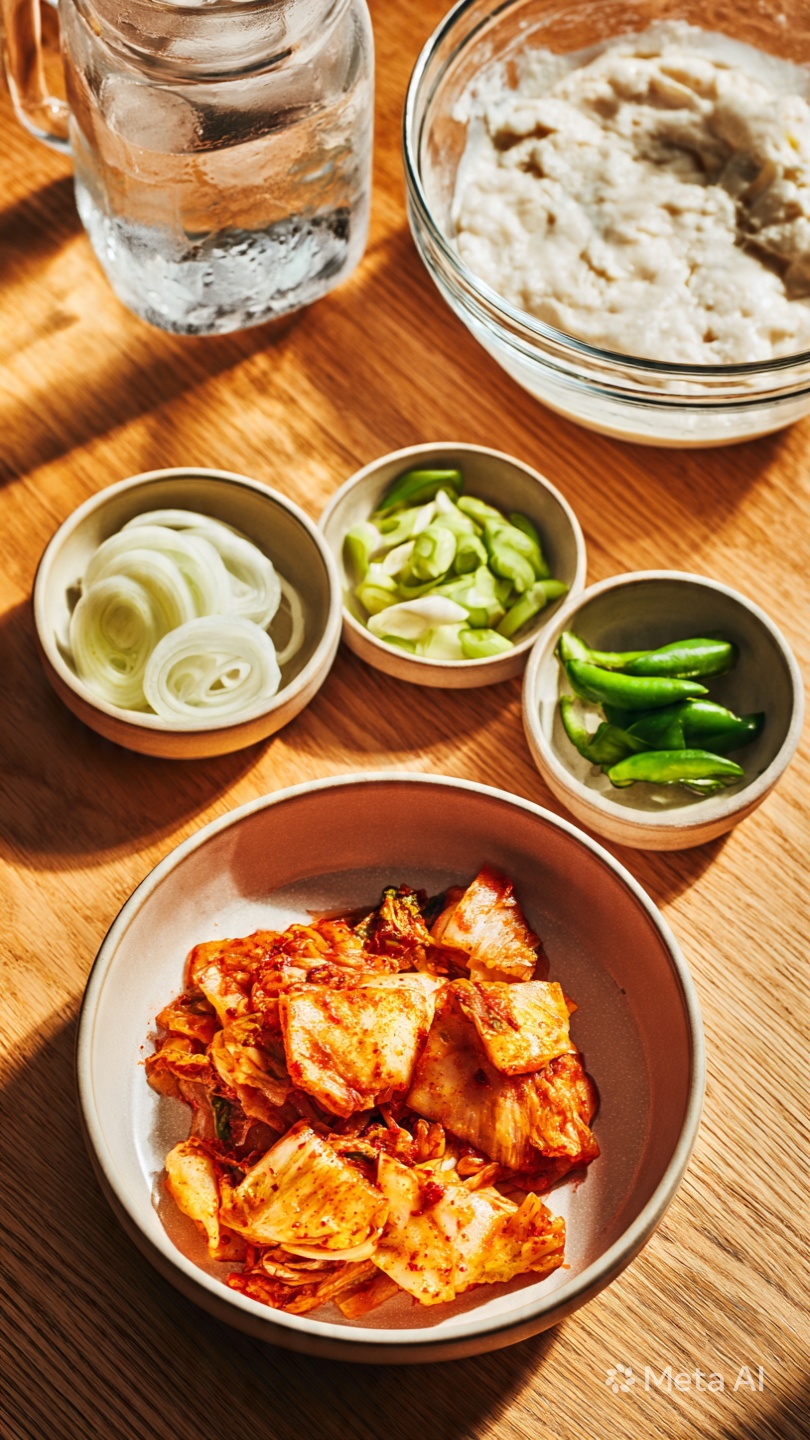
Place the sour kimchi in a bowl and cut it into small pieces with scissors. This keeps kimchi juice from staining your cutting board and makes cleanup easier. Thinly slice the onion, and chop the green onion and Cheongyang chili peppers. It is fine if a little kimchi juice naturally goes into the batter, but avoid adding a lot separately.
Add 1 cup of Korean pancake mix and 1 cup of frying mix to a large bowl, then pour in 1.5 cups of ice water first. Mix lightly with chopsticks just until the flour is roughly loosened. It is okay if a few small lumps remain in the batter. The longer you stir, the tougher the batter can become, so mix quickly and lightly.
Add the chopped kimchi, onion, green onion, and Cheongyang chili peppers to the batter. If you want a deeper red color, add 1 tablespoon of Korean red pepper powder. If your kimchi is very sour, add 0.5 tablespoon of sugar. The sugar is not mainly for sweetness; it helps soften the sharp acidity of well-fermented kimchi.
Heat a frying pan thoroughly over medium heat, then add a generous amount of cooking oil. If you use too little oil, the kimchi pancake may stick to the pan and the surface will cook dry instead of crisp. Add enough oil so it lightly flows when you tilt the pan. This lets the edges cook as if they are being fried.
Scoop a ladleful of batter into the pan and spread it thinly enough that you can almost see small gaps. If the pancake is too thick, moisture in the center will not escape and the inside can become mushy. The thinner you make kimchi jeon, the crispier the edges become and the easier it is to flip.
It is time to flip when the edges are golden, the top of the batter turns slightly translucent, and bubbles begin to rise. If you flip too early, the pancake may tear. If you flip too late, the bottom can burn. After flipping, press gently with a spatula and cook the other side until golden brown.
How to Keep It Crispy Longer
Keep the Batter Cold and the Pan Hot
Kimchi pancakes develop their best texture when cold batter meets hot oil, allowing the outside to cook quickly. If you make the batter too far in advance, water will come out of the kimchi and vegetables, thinning the batter. Prepare all the ingredients first, then mix the batter right before cooking.
Do Not Rely on the First Pour of Oil
After cooking the first pancake, leftover kimchi seasoning and bits of batter in the pan absorb some of the oil. From the second pancake onward, add a little more oil to maintain the same crispness. It is important not to cook on a dry pan surface.
Do Not Stack the Finished Pancakes
If you stack freshly cooked kimchi pancakes on a plate, steam collects underneath and they quickly become soggy. If possible, lay them out one by one. If you are not eating them right away, place them briefly on a cooling rack or paper towel.
Common Problems and Fixes
When the Center Is Mushy
This usually means the batter was too thick or had too much water. Next time, reduce the water slightly and spread the batter thinner in the pan. Adding too much kimchi juice can also make the center soggy.
When It Tears While Flipping
The pan may not have been hot enough, or the bottom may not have cooked fully before flipping. Flip when the edges are golden and the top of the batter is about halfway cooked, and the pancake will hold its shape much better.
When It Tastes Too Sour or Too Salty
If the kimchi is very fermented, add a small amount of sugar to balance the acidity. If the kimchi is on the salty side, avoid adding extra kimchi juice and add a little more onion or green onion to mellow out the flavor.
Good Add-ins to Try
Squid adds a pleasant chewy bite, while finely chopped pork brings a richer, savory flavor. Tuna or Spam is already salty, so adjust the amount if your kimchi is salty. If you are making this for children, leave out the Cheongyang chili peppers and add a little more onion to reduce the spiciness.
Super-Simple Dipping Sauce
Mix 2 tablespoons dark soy sauce, 1 tablespoon vinegar, 1 tablespoon water, a pinch of Korean red pepper powder, and a little toasted sesame seed for a dipping sauce that goes well with kimchi pancakes. Since kimchi jeon is already seasoned, it is best to dip just the edge lightly rather than using too much sauce.
Frequently Asked Questions
Yes, you can. However, if you want a crispier texture, it is better to mix in some frying mix. The most reliable ratio is 1:1 pancake mix to frying mix.
A little is fine, but adding too much can make the batter thin and cause it to burn more easily. If you want more color, adding a small amount of Korean red pepper powder is more stable than adding extra kimchi juice.
It is not recommended. Moisture will come out of the kimchi and vegetables, making the batter thinner over time. It is better to prep the ingredients ahead and mix the batter right before cooking.
A dry pan or air fryer is better than a microwave. A microwave will warm them through, but it can reduce their crispness.
Final Thoughts
Kimchi pancakes are not difficult to make, but small details matter if you want them crispy. The essentials are mixing pancake mix with frying mix, making the batter quickly with ice water, using a generous amount of oil, and spreading the batter thinly in the pan. When the deep flavor of sour kimchi meets crisp golden edges, even simple ingredients can turn into a deeply satisfying meal.