Hope Preview: Na Hong-jin Returns With a Cannes-Tested Korean Sci-Fi Thriller
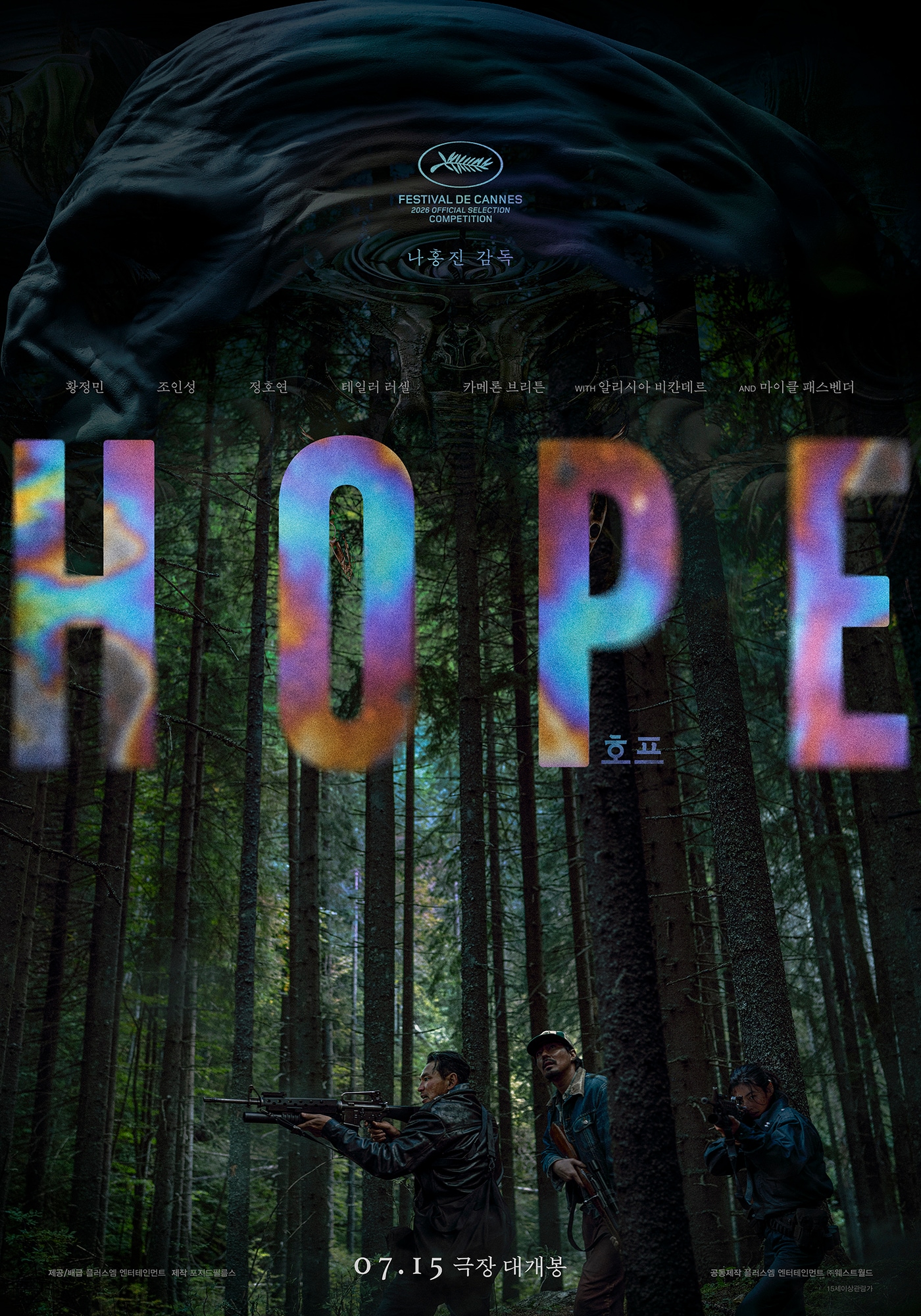
Na Hong-jin’s Hope is one of the most intriguing Korean theatrical releases on the 2026 calendar. Reported for a July 15, 2026 domestic opening, the film marks the director’s long-awaited return after The Wailing and brings together a large Korean and international cast led by Hwang Jung-min, Zo In-sung, HoYeon, Taylor Russell, Cameron Britton, Alicia Vikander, and Michael Fassbender. It has already drawn attention through its Cannes competition appearance, where early reactions were described as intense and divided rather than quietly polite.
That is exactly the kind of response many viewers expect from Na Hong-jin. His films are rarely designed to be comfortable. The Chaser used pursuit and exhaustion to trap the audience in a city that felt morally broken. The Yellow Sea pushed survival, violence, and betrayal into a harsher register. The Wailing turned a rural mystery into a nightmare about belief, fear, suspicion, and the limits of interpretation. With Hope, the question is not only what kind of story he is telling, but how far he can expand his signature dread into a larger science-fiction thriller frame.
Basic premise and release context
Public reporting describes Hope as beginning in Hopo Port, a remote area near the demilitarized zone. The story is said to start when local young people report the discovery of an unidentified presence, drawing the attention of Beom-seok, a branch-office chief or local official figure. From that seed, the film appears to move into a genre space where community anxiety, unknown forces, and human decision-making collide.
The domestic release date reported in Korean entertainment coverage is July 15, 2026. As with any theatrical preview, viewers should still check current cinema listings close to release for final showtimes, rating information, runtime, and regional availability. The film has been discussed as a science-fiction thriller or action-thriller, but Na’s past work suggests that genre labels may only tell part of the story.
Why Na Hong-jin’s return matters
Na Hong-jin has directed relatively few features, but each one has had a strong afterlife. His films are remembered not just for plot mechanics, but for physical pressure: characters sweat, run, panic, doubt, and make terrible decisions under impossible stress. He often builds suspense from the gap between what people think they understand and what is actually happening.
That makes Hope interesting even before the details are fully public. A lesser film might treat an unidentified presence as a simple monster, alien, or threat. Na is more likely to treat it as a trigger. The presence may matter, but the human response to it may matter more. Who believes the report? Who dismisses it? Who tries to control the information? Who uses fear for power? Who falls apart when the familiar world stops making sense?
In that sense, Hope could continue the director’s interest in communities under pressure. The setting near a tense border region adds another layer: isolation, security, rumor, military imagination, and local survival can all become part of the atmosphere. Even if the film contains spectacle, its most unsettling moments may come from people reacting to uncertainty.
A cast built for scale and tension
The cast is one of the clearest reasons Hope has attracted international attention. Hwang Jung-min brings a grounded, forceful screen presence that can carry panic, anger, fatigue, and stubborn humanity. In a Na Hong-jin film, that kind of energy is valuable because characters are often pushed past their limits rather than allowed to remain composed.
Zo In-sung is another major point of interest. Cannes-related reports have drawn attention to his role in the film’s isolated port setting, and his presence suggests a character who may carry physicality, ambiguity, or local knowledge. HoYeon’s involvement adds another global-facing element, especially after her rise to international visibility. The combination of Korean stars with Taylor Russell, Cameron Britton, Alicia Vikander, and Michael Fassbender makes the film feel unusually expansive for a Korean genre release.
The challenge is integration. A global cast can become a marketing hook, but the film will only benefit if the characters belong inside the same dramatic pressure cooker. Hope needs more than recognizable names. It needs a shared atmosphere where language, fear, and mistrust all serve the story.
Cannes reactions: a useful warning, not a verdict
Hope’s Cannes competition screening is important because it places the film in a high-profile international context before its Korean theatrical run. Reports after the premiere pointed to strong reactions, including praise and discomfort. That mix should not be simplified into either universal acclaim or failure. Cannes audiences often respond intensely to films that test patience, taste, violence, structure, or moral certainty.
For a Na Hong-jin film, divided reactions may be almost expected. The Wailing also left many viewers arguing about meaning, faith, manipulation, and the reliability of what they had seen. If Hope is similarly confrontational, early disagreement could be a sign that the film is doing something riskier than delivering clean genre satisfaction.
The important point for viewers is expectation management. Do not go in expecting a smooth blockbuster simply because the cast is large and the genre sounds accessible. Hope may be violent, strange, slow in parts, overwhelming, or morally uncomfortable. It may also contain the kind of sustained dread that makes Na’s work linger long after the plot is over.
The sci-fi element could change the director’s usual grammar
Science fiction is a meaningful shift for Na Hong-jin, at least on the surface. His previous films often made the world feel cursed without needing futuristic devices. Hope seems to introduce a more openly speculative element through the reported unidentified presence. That could give him a larger canvas: biological threat, extraterrestrial suggestion, military secrecy, environmental fear, or something more symbolic.
The best version of Hope would not use science fiction only as decoration. It would let the unknown force reshape how people behave. In strong speculative thrillers, the fantastic element reveals social and moral weaknesses that were already present. A strange discovery can expose cowardice, loyalty, greed, grief, superstition, or institutional failure. Given Na’s past work, that is where the film may become most powerful.
What to watch for in the theater
First, watch the setting. Na’s films often make places feel alive with danger. Streets, roads, houses, fields, and police stations are not neutral backdrops; they trap people in patterns of fear. Hopo Port may function the same way, as a community where geography limits escape and rumor travels faster than truth.
Second, watch how information moves. Who knows what, when, and through whom? In a story about an unidentified presence, the flow of information can be more frightening than the presence itself. Confusion can create violence before the threat is even understood.
Third, watch the film’s treatment of belief. Na’s cinema repeatedly asks what people do when evidence is incomplete. Hope may replace religious dread with speculative dread, but the underlying question could remain similar: how do people act when they cannot tell whether they are facing a natural event, a human conspiracy, or something beyond their categories?
Who should be excited
Viewers who admire The Wailing should have Hope near the top of their watchlist, especially if they are drawn to slow-building dread and unresolved moral pressure. Fans of Korean thrillers, border-region mysteries, and ambitious international genre films also have reason to pay attention. The cast alone makes it a major event, but the director’s return is the real attraction.
Viewers who prefer clean explanations, light pacing, and heroic certainty may want to approach with caution. Na Hong-jin often withholds comfort. If Hope follows that pattern, it may be less interested in answering every question than in making the audience feel the cost of not knowing.
Image and coverage note
Official stills and press images have appeared in Korean media reports, but bloggers should not assume every article image is reusable. For publication, use only official distributor materials, cinema-chain assets, or verified press resources with clear usage rights. If that is not available, a text-only preview is safer than an unofficial poster.
FAQ
When is Hope expected to open in Korea?
Korean entertainment reporting has listed July 15, 2026 as the domestic theatrical release date. Check cinema listings near release for final schedules and local availability.
Who directed Hope?
Hope is directed by Na Hong-jin, known for The Chaser, The Yellow Sea, and The Wailing.
Who is in the cast?
Reported cast members include Hwang Jung-min, Zo In-sung, HoYeon, Taylor Russell, Cameron Britton, Alicia Vikander, and Michael Fassbender.
What is Hope about?
Public descriptions point to a remote port near the demilitarized zone, where the discovery of an unidentified presence triggers a dangerous chain of events. The film is being discussed as a science-fiction thriller or action-thriller.
Were the Cannes reactions positive?
The Cannes response appears to have been intense and mixed, with praise and discomfort both reported. That should be treated as a sign of a provocative film rather than a simple quality score.
Final thoughts
Hope looks less like a routine summer thriller and more like a major test of how far Na Hong-jin can stretch his cinema of suspicion, fear, and moral pressure. The reported premise offers spectacle, but the director’s history suggests that the real terror may come from people trying to interpret the unknown before they are ready. With a major cast, a Cannes-tested reputation, and a July theatrical opening, Hope is one of the Korean films most worth tracking this summer, provided viewers go in prepared for intensity rather than easy comfort.