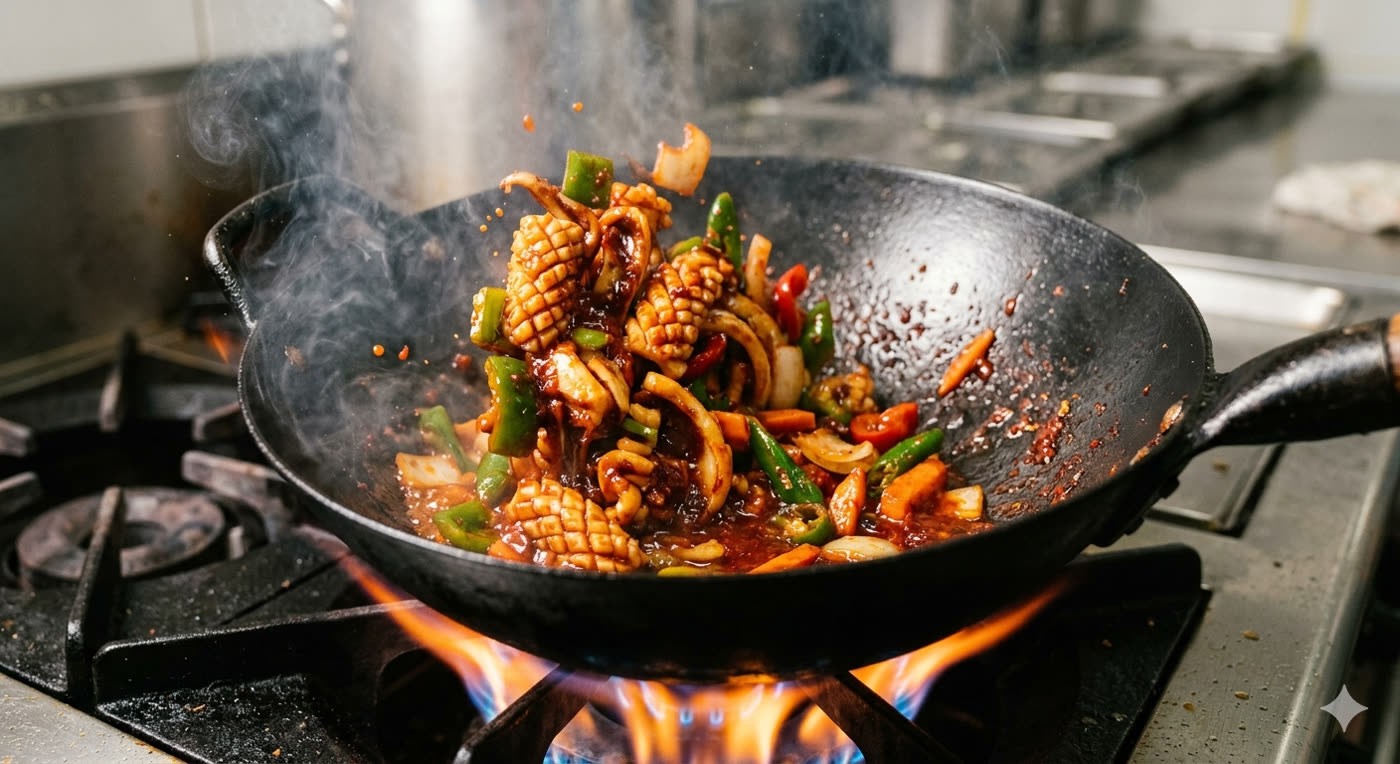
Ojingeo Bokkeum Recipe
Spicy Korean Squid Stir-Fry Without Watery Sauce
The secret is to control moisture: briefly blanch the squid, stir-fry vegetables over high heat, and coat everything with the sauce at the end.
Ojingeo bokkeum often becomes watery at home because squid and vegetables release moisture while cooking. If the sauce goes in too early, the dish starts boiling instead of stir-frying.
This recipe uses a short blanching step for the squid, then a fast high-heat stir-fry. The result is a glossy, spicy sauce that clings to the squid instead of pooling at the bottom of the pan.

Ingredients
| Ingredient | Amount |
|---|---|
| Squid | About 2 medium squid, cleaned and scored |
| Vegetables | Onion, cabbage, green onion, chili peppers |
| Sauce | Gochujang, gochugaru, soy sauce, garlic, sugar or syrup, pepper, sesame oil |
Key technique
Blanch the squid for only 10 to 15 seconds until the surface turns white and opaque. Drain well. This reduces the moisture released during the final stir-fry and helps keep the texture tender.
Cook the vegetables quickly over high heat, then add squid and sauce near the end. Long cooking makes squid tough and pulls out more liquid.

How to cook
- Clean and score the squid, then cut it into bite-size pieces.
- Mix the sauce ingredients in advance so the final stir-fry is fast.
- Blanch the squid briefly, drain, and set aside.
- Stir-fry green onion and vegetables over high heat.
- Add squid and sauce, then toss quickly for one to two minutes.
- Finish with sesame oil, sesame seeds, and sliced green onion.
Serving ideas
Serve with steamed rice, lettuce wraps, or simple soup. Leftovers also work well over rice as a spicy squid rice bowl.

Bottom line
The best ojingeo bokkeum is not about adding more sauce. It is about removing extra moisture and finishing the dish quickly over strong heat.
이 글은 제휴활동의 일환으로, 구매가 발생할 경우 일정액의 수수료를 제공받을 수 있습니다.