K-Food · Korean cooking at home · 한국어 레시피
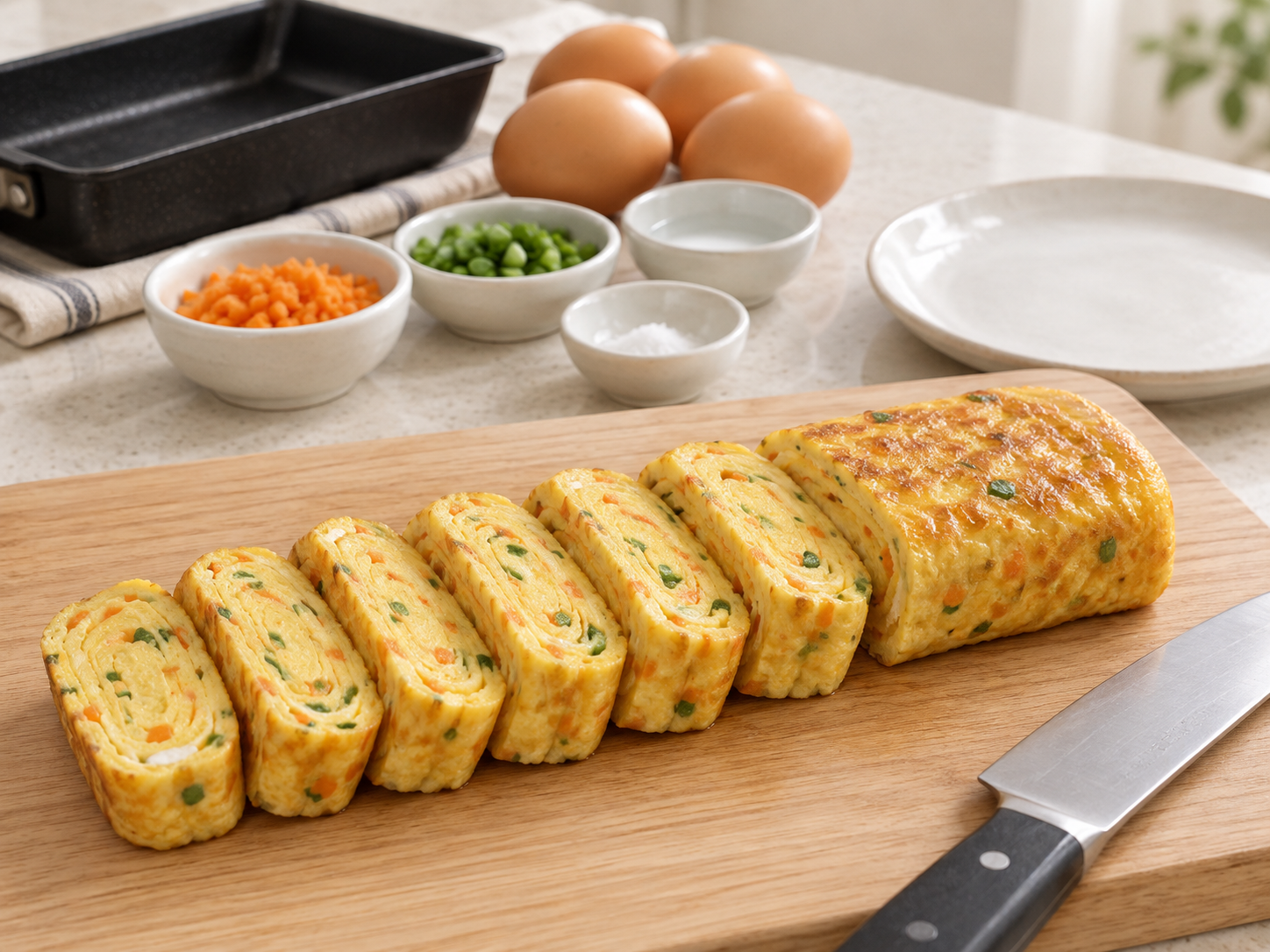
Gyeran mari (계란말이) is a Korean rolled omelet, sliced into bite-size pieces and often served as a small side dish, or banchan. There is no pastry wrapper to buy: the egg itself forms the layers. This four-egg version uses carrot and scallion and walks through the part that matters most—joining each thin layer to the roll already in the pan.
Yield: 2 side-dish servings · Estimated time: 10 minutes preparation, 10 minutes cooking, plus 3 minutes before slicing. Pan size, egg size and heat will change the timing.
All four illustrations are AI-generated, not photographs from a kitchen test of this recipe. Use the measurements and doneness checks below; the pictures do not show exact ingredient quantities.
Ingredients for one small roll
- 4 large eggs
- 2 tablespoons finely minced carrot
- 1 tablespoon finely chopped scallion (green onion)
- 1 tablespoon water (15ml)
- ¼ teaspoon fine salt
- About 2 teaspoons neutral cooking oil, used in small amounts for the pan
Use measuring spoons: 1 tablespoon = 15ml and 1 teaspoon = 5ml. Cut the carrot into tiny pieces, about 2–3mm across. Large vegetable pieces can interrupt the thin egg layer. This version contains no milk, sugar or soy sauce. It contains eggs and is not suitable for someone with an egg allergy.
Equipment: a nonstick rectangular omelet pan about 20 × 15cm (8 × 6in), or a small 20–22cm (8–9in) round skillet; a wide spatula; a bowl and fork; a clean cutting board and knife. A rectangular pan makes the ends neater, but you do not need one to try the recipe. A much larger pan will spread the egg more thinly.

How to build the layers
1. Make a consistent egg mixture
Beat the eggs until the whites and yolks blend evenly, then mix in the water, salt, carrot and scallion. Stir again before each pour so the vegetables do not all settle into the last layer. Do not taste the raw mixture.

2. Let a thin layer set gently
Warm the pan over medium-low heat and spread a thin film of oil across its cooking surface. A small drop of egg should set gently. If it spits sharply or browns immediately, lower the heat and briefly move the pan off the burner. Pour in roughly one third of the mixture and tilt the pan to cover the base.
3. Fold, move, refill
When the bottom holds together and the surface no longer has a pool of liquid egg, fold a narrow strip—about 2–3cm (1in)—over itself. The surface can still look slightly moist, but do not trap a puddle of raw egg inside. Continue folding in small movements, then slide the roll to one side of the pan.
Lightly oil the exposed pan if needed. Pour in half the remaining mixture and let a little reach beneath the edge of the existing roll. That overlap joins the layers. Wait for the new sheet to hold together, roll it around the first section, and repeat with the last of the mixture. Treat three pours as a starting plan, not a strict rule: a different pan may need thinner, smaller pours.

4. Cook the center, then slice
Finish on low heat with the seam underneath, turning the roll to warm the sides as well. The outside can look cooked before the center is ready, so do not rely on browning or a fixed cooking time. Check the thickest center with a food thermometer when possible; see the temperature guidance below.
Move to a clean cutting board. Rest for about 3 minutes, then slice into pieces 1.5–2cm (roughly ¾in) thick without pressing the roll flat. Serve alongside rice and other dishes. For a first attempt, even slices matter more than perfectly square ends.

Read the pan: a beginner’s troubleshooting guide
- The sheet tears as you lift it: let it set for another 10–20 seconds and support more of it with the spatula. Small tears can be wrapped inside the next thin layer. For your next batch, check whether the vegetable pieces were too large.
- The bottom browns before you can fold: turn down the heat and briefly lift the pan away from the burner. Adding more oil will not solve excessive heat.
- The egg sticks: loosen the edge gently rather than scraping forcefully. Check that the cooking surface is in good condition and lightly oiled before the next pour.
- The center runs when sliced: cook it further before serving and check its internal temperature. A tidy roll is not a substitute for fully cooked egg.
What you can change without buying more equipment
Scallion can be left out. If you try another vegetable, mince it finely, remove excess moisture and keep the total filling modest. Start with the plain version before adding cheese or meat: extra fillings change the thickness, seasoning and cooking requirements. A round skillet works; its curved edges simply give the roll less uniform ends.
Doneness and packing for later
FoodSafety.gov recommends 160°F (about 71°C) at the center for egg dishes without meat or poultry. Wash hands and utensils after contact with raw eggs, and use a clean plate for the cooked omelet.
Refrigerate within 2 hours of cooking, or within 1 hour when the surrounding temperature is above 90°F (about 32°C). Do not leave it out for a long time waiting for it to become completely cold; portion it into small containers for refrigeration. Use an insulated bag and cold packs for a packed lunch rather than leaving an egg dish in a warm car.
References and editorial note
Background on the basic rolling technique: Korean Bapsang’s gyeran mari guide. Quantities and explanations here are arranged as a separate four-egg beginner’s version. Food-safety reference: FoodSafety.gov: Salmonella and Eggs. Sources checked September 29, 2026.
Edited by microdog. This recipe contains no affiliate shopping links.
답글 남기기