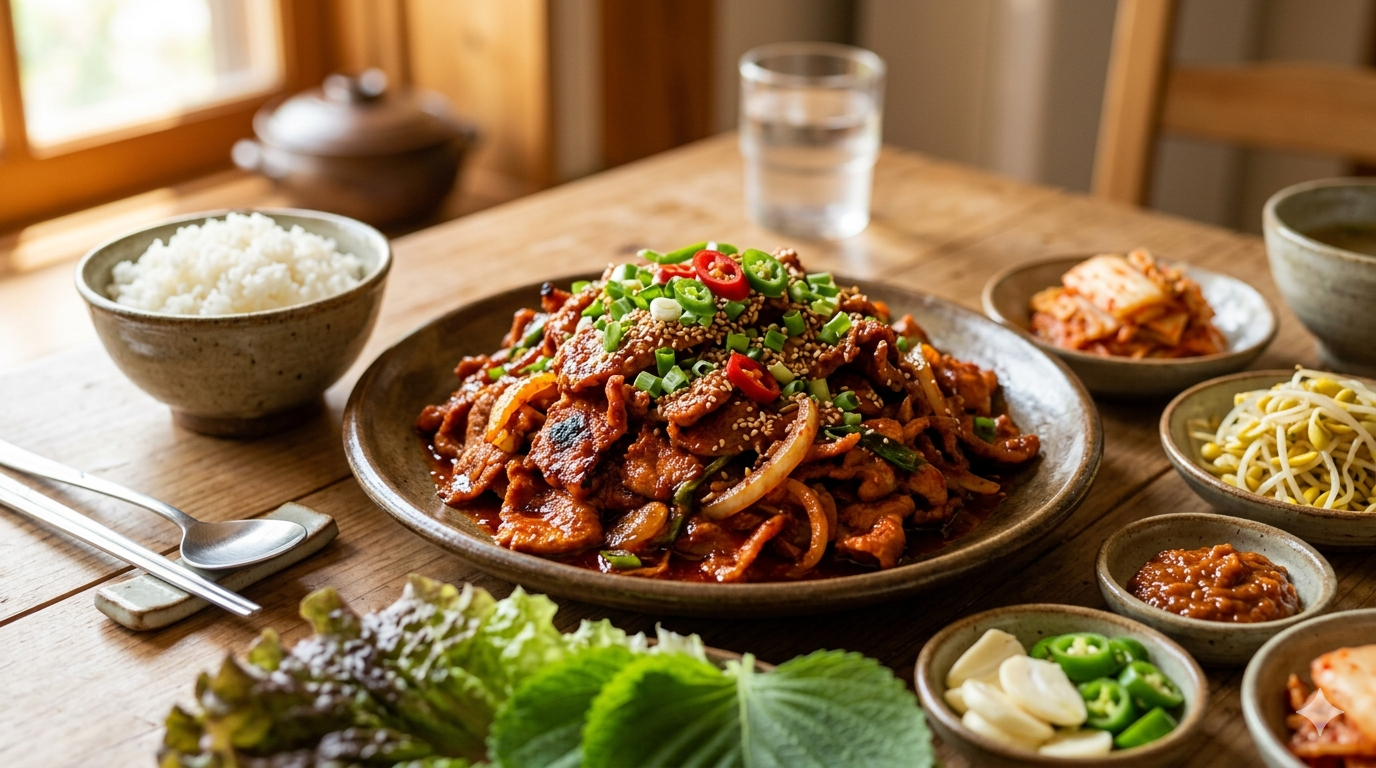
Jeyuk bokkeum looks simple, but it can easily become watery or taste flat at home. This Ryu Soo-young style Galbae Jeyuk uses a canned Korean pear drink, gochujang, soy sauce, vinegar, garlic, and ginger to marinate thin pork front-leg slices, then cooks the meat first so the sauce clings to the pork instead of pooling in the pan.
Ryu Soo-young Galbae Jeyuk Recipe
Korean Spicy Pork with Pear Drink Marinade
The base ratio is easy to remember: 600 g thin pork front leg, 2 tablespoons sugar, 3 tablespoons soy sauce, 2 tablespoons vinegar, 3 tablespoons gochujang, and one 238 ml can of pear drink. The real key is the cooking order: pat the pork dry, separate each slice, sear the pork first, and add vegetables later.

What is Galbae Jeyuk?
Galbae Jeyuk is a spicy Korean pork stir-fry made with galbae, a Korean pear drink often used as an easy marinade shortcut. The drink adds sweetness and a mild fruit aroma, while gochujang and soy sauce provide the spicy-savory base.
This recipe is especially useful when you want a reliable dinner dish with rice, lettuce wraps, steamed egg, or a light soup. Thin pork front leg is affordable, cooks quickly, and absorbs the sauce well when each slice is separated before marinating.
Basic information
| Dish | Galbae Jeyuk / Korean spicy pork stir-fry |
|---|---|
| Main cut | Thinly sliced pork front leg or shoulder, about 600 g |
| Core sauce | Pear drink, gochujang, soy sauce, sugar, vinegar, garlic, ginger, sesame oil |
| Serving size | About 3 to 4 servings |
| Flavor point | Sweet pear aroma, spicy gochujang sauce, reduced moisture, and a lightly seared finish |
For Ryu Soo-young style Galbae Jeyuk, mix sugar, soy sauce, vinegar, gochujang, minced garlic, minced ginger, and one can of pear drink. Marinate separated pork slices, then cook the pork first over medium-high heat. Add onion and green onion only after the pork begins to cook so the stir-fry stays glossy rather than watery.
Ingredient ratio
| Ingredient | Amount | Role |
|---|---|---|
| Thin pork front leg | 600 g | Main protein |
| Pear drink | 1 can, about 238 ml | Sweetness, fruit aroma, marinade base |
| Sugar | 2 tablespoons | Sweetness and shine |
| Soy sauce | 3 tablespoons | Saltiness and umami |
| Vinegar | 2 tablespoons | Clean finish and odor control; sharp acidity cooks off |
| Gochujang | 3 tablespoons | Main spicy-sweet flavor |
| Garlic and ginger | To taste | Aroma and pork-odor control |

Cooking order
Press the pork gently with kitchen towels. This simple step helps reduce pork odor and prevents the sauce from becoming diluted.
In a container, combine sugar, soy sauce, vinegar, gochujang, garlic, ginger, and pear drink. Stir until the gochujang and sugar are fully dissolved.
Add the pork one slice at a time. If the meat goes in as one clump, the sauce will not coat the center evenly and the stir-fry can cook unevenly.
Place only the marinated pork in a hot pan and spread it out. Let one side cook briefly before stirring so the meat develops a deeper flavor.
Onion, green onion, and chili should go in after the pork begins to cook. This keeps the vegetables from releasing too much water too early.
When the sauce thickens and clings to the meat, finish with sesame seeds and pepper. Serve with rice or lettuce wraps.
Common mistakes
Adding vegetables too early is the most common reason the dish turns watery. Cook the pork first, then add vegetables briefly at the end.
Using too much ginger can make the sauce taste bitter or harsh. Start with a small amount and adjust later.
Stirring constantly from the beginning prevents browning. Let the pork touch the pan long enough to develop aroma before tossing.

Final note
Galbae Jeyuk is a practical weeknight dish because the sauce ratio is memorable and the ingredients are easy to find. If you remember only three points, remember these: remove moisture, separate the meat, and cook the pork before the vegetables.