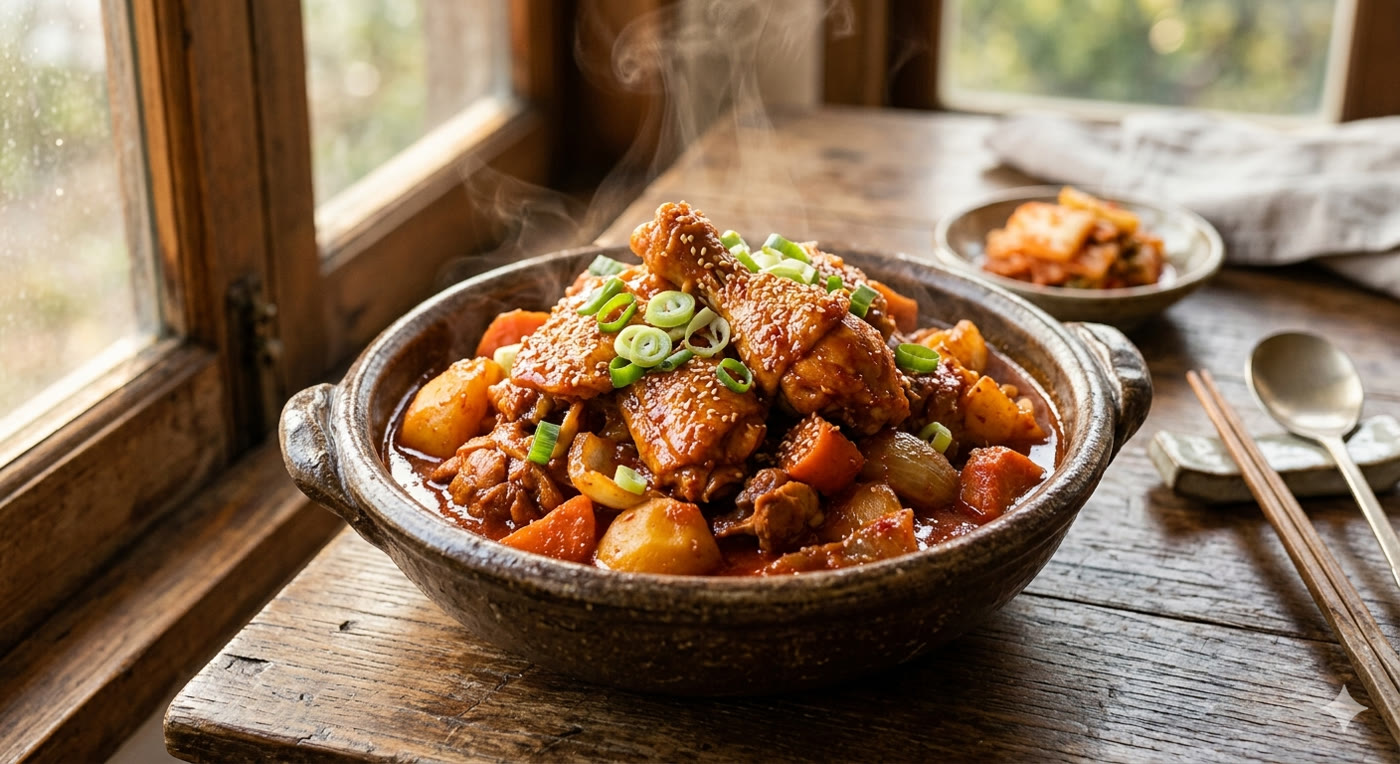
When you need a satisfying dinner, dakbokkeumtang is one of the easiest Korean home meals to crave. It is a spicy-sweet braised chicken stew with potatoes, carrots, onion, and a thick red sauce. The dish looks simple, but the order of blanching the chicken and simmering the seasoning makes a big difference.
Dakbokkeumtang Golden Recipe
Spicy Korean Braised Chicken Stew
This version is based on about 1 kg of cut chicken, 600 ml water, potatoes, and a balanced sauce of Korean chili flakes, gochujang, and soy sauce. The key is to briefly blanch the chicken first, then simmer it long enough for the sauce to soak into the meat and potatoes.
Dakbokkeumtang, sometimes called dakdoritang, is a classic Korean one-pot dish. Chicken, potatoes, carrots, and onion are simmered together until the sauce becomes rich and slightly thick from the potato starch.
The two most important steps are removing impurities from the chicken and giving the seasoning enough time to penetrate. If raw chicken is placed directly into the sauce, foam and odor can remain. A short blanch makes the broth cleaner and the flavor clearer.

Basic information
| Dish | Dakbokkeumtang, dakdoritang, spicy braised chicken |
|---|---|
| Serving size | 3 to 4 servings |
| Main ingredient | About 1 kg cut chicken for stew |
| Cooking time | About 45 to 55 minutes including preparation |
| Flavor point | Clean blanching, balanced chili sauce, and thick potato-rich broth |
| Safety point | Cook chicken thoroughly to the center |
Blanch the chicken for 3 to 5 minutes, make the sauce with chili flakes, gochujang, soy sauce, sugar, syrup, minced garlic, and cooking wine, then simmer the chicken with potatoes and carrots for about 20 minutes. Add onion near the end and finish with green onion and chili peppers.
Flavor keys
First, blanch the chicken. A brief blanch removes foam and impurities, especially around the bones. This gives the finished stew a cleaner taste.
Second, mix the sauce first. Combining the chili flakes, gochujang, soy sauce, garlic, sugar, and syrup before cooking helps the sauce dissolve evenly.
Third, cut potatoes and carrots large. If the pieces are too small, they break apart and make the broth cloudy.
Ingredients
| Ingredient | Amount | Role |
|---|---|---|
| cut chicken for dakbokkeumtang | About 1 kg | Main ingredient |
| potatoes | 2 to 3 medium | Soft texture and sauce thickness |
| Carrot | 1/2 | Sweetness and color |
| Onion | 1 | Sweetness and broth flavor |
| Green onion | 1 stalk | Finishing aroma |
| Water | 600 ml | Base broth |
Seasoning ratio
| Korean chili flakes | 4 tablespoons |
|---|---|
| gochujang | 2 tablespoons |
| soy sauce | 8 tablespoons |
| Sugar | 2 tablespoons |
| corn syrup or oligosaccharide syrup | 2 tablespoons |
| Minced garlic | 2 tablespoons |
| Cooking wine | 2 tablespoons |
How to make dakbokkeumtang
1. Prepare the chicken. Remove visible blood clots or residue around the bones. If rinsing is necessary, keep splashing to a minimum and clean the sink and tools right away.
2. Blanch briefly. Boil water with soju or cooking wine, add the chicken, and blanch for 3 to 5 minutes.
3. Cut the vegetables. Cut potatoes and carrots into large chunks, onion into thick wedges, and green onion and chili peppers diagonally.

4. Make the sauce. Mix chili flakes, gochujang, soy sauce, sugar, syrup, minced garlic, cooking wine, and pepper.
5. Simmer the chicken and firm vegetables. Add blanched chicken, potatoes, carrots, water, and sauce to a pot. Bring to a boil, then reduce to medium heat and simmer for about 20 minutes.
6. Add onion and reduce. When the potatoes are tender, add onion and simmer 5 to 10 minutes longer until the sauce becomes thick. Finish with green onion and chili peppers.
Extra tips
For deeper flavor, you can add sugar early so sweetness soaks into the chicken. A very small amount of curry powder can reduce odor, but too much will overpower the stew. If adding glass noodles, add them near the end because they absorb a lot of liquid.
Common problems and fixes
| Problem | Likely reason | Fix |
|---|---|---|
| Gamey smell | Not enough cleaning or no blanching | Trim residue and blanch with cooking wine |
| Cloudy sauce | Too much gochujang or broken potatoes | Use more chili flakes and cut potatoes large |
| Potatoes fall apart | Pieces are too small or stirred too often | Cut large and stir gently |
| Too watery | Not reduced at the end | Simmer uncovered for the last few minutes |
Food safety note: Chicken should be cooked thoroughly to the center. If using a kitchen thermometer, make sure the thickest part reaches a safe temperature. Wash hands, cutting boards, knives, and the sink after handling raw chicken.

FAQ
Q. Do I have to blanch the chicken?
A. It is not mandatory, but it helps reduce odor and makes the broth cleaner.
Q. When should I add glass noodles?
A. Add soaked glass noodles about 5 minutes before the dish is done so they do not absorb too much broth.
Q. How should leftovers be stored?
A. Cool the stew, store it in an airtight container, and reheat it thoroughly before eating.
Final note
Dakbokkeumtang depends on order more than complicated ingredients. Blanch the chicken, simmer the potatoes and carrots first, add onion later, and finish with green onion. With that simple order, the sauce becomes rich, spicy, sweet, and deeply comforting.
#Dakbokkeumtang #Dakdoritang #KoreanBraisedChicken #KoreanRecipe #KoreanFood #SpicyChickenStew #HomeCooking