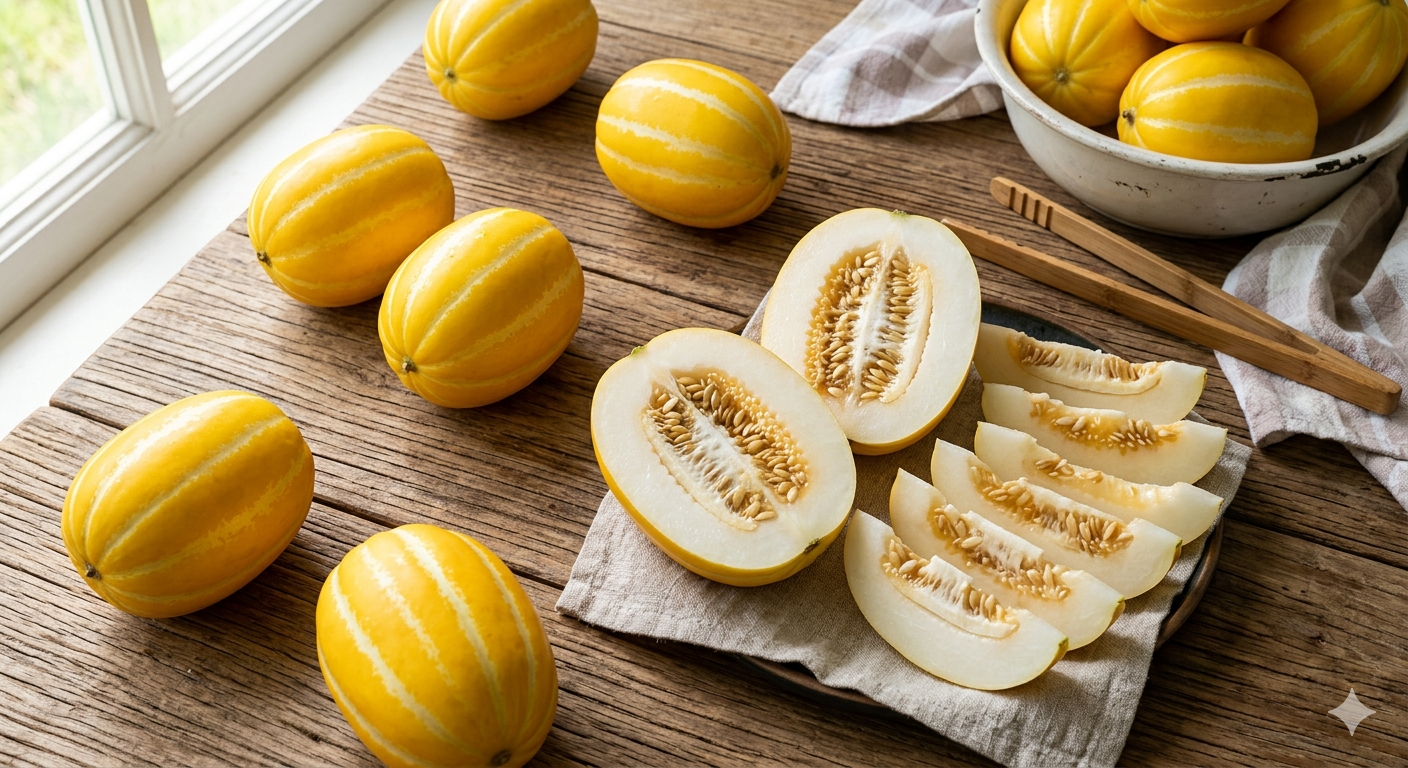
In summer, water alone may not always feel refreshing enough. A chilled slice of Korean melon gives sweetness, moisture and a crisp texture at the same time. Still, eating too much can upset the stomach, and people who manage kidney disease, potassium intake or blood sugar should control portions.
Korean Melon Benefits Guide
Hydration, Folate, Potassium, Vitamin C, Seeds and Peel
Korean melon, also called chamoe or Oriental melon, is an Asian melon with a high water content. It can help with summer hydration while providing nutrients such as folate, potassium, vitamin C and dietary fiber. It is better to separate realistic nutrition points from exaggerated claims such as changing body pH or preventing disease.
Korean melon is known in English as Oriental melon or Korean melon and belongs botanically to Cucumis melo Makuwa Group. Public references describe this melon group as about 90% water, with a thin peel and small seeds that can often be eaten together. Exact nutrition values vary by variety, growing condition, size and ripeness, so detailed numbers should be checked through the official food nutrient database.
Korean melon is sometimes described as an alkaline food, but that does not mean it directly changes blood pH or body constitution. The human body regulates blood acidity within a narrow range. This article focuses on verifiable nutrition characteristics and practical eating cautions.
Basic information

Five main benefits of Korean melon
1. Hydration and thirst relief
Korean melon has a high water content. When eaten chilled on a hot day, it provides water, natural sugar and minerals, making it a useful summer snack. Water should still remain the main source of hydration.
2. Folate intake
Korean melon is known as a fruit that contains folate. Folate is important in early pregnancy for neural tube development and is also involved in red blood cell formation. Pregnant people should not rely on Korean melon alone and should follow professional guidance on folate supplements and diet.
3. Potassium and sodium balance
Korean melon contains potassium, a mineral often discussed in relation to sodium balance and blood-pressure-supportive eating patterns. People who often eat salty foods may benefit from a broader pattern of eating enough fruit and vegetables.
4. Vitamin C and antioxidant points
Vitamin C is involved in antioxidant function, collagen formation and normal immune function. Korean melon can be one light way to add vitamin C during summer, but it should be seen as part of a balanced diet rather than a skin-whitening or disease-prevention solution.
5. Light calories and fullness
Because Korean melon is watery and crisp, it can be a lighter snack than cookies, bread or sweet drinks. It still contains natural fruit sugar, so eating many melons at once is not ideal.
A cautious note on cucurbitacin
Bitter compounds around the stem or peel are often described as cucurbitacins. These compounds are discussed in experimental research, but eating Korean melon should not be claimed to prevent or treat cancer. If a melon tastes strongly bitter, it is better not to force yourself to eat it.
Should you eat the seed area?
The placenta is the moist area where the seeds are attached.
This part is sweet and juicy, and many people consider it the tastiest part. It is commonly eaten with the seeds if digestion is comfortable.
It does not fit everyone.
Some people feel digestive discomfort from the seeds and moist center. If your stomach or bowels are sensitive, remove some seeds and eat mainly the flesh.
Cleaning is essential if eating the peel.
The peel is thin and can be eaten after careful washing. Rinse under running water and, if needed, briefly soak with baking soda or vinegar water before scrubbing. If the peel is damaged, moldy or dirty, peel it off.

Important cautions
1. People with kidney disease should check potassium intake.
Potassium is important for healthy people, but people with reduced kidney function may have difficulty excreting it. If you are at risk of hyperkalemia, discuss fruit and vegetable portions with your healthcare team.
2. Avoid overeating if your stomach is sensitive.
Korean melon is watery and often eaten cold, so some people may experience bloating, stomach pain or diarrhea. Start with half to one melon rather than eating a large amount.
3. Control portions when managing blood sugar.
It is a fruit and contains natural sugars. People with diabetes or blood-sugar concerns should fit it into their meal plan rather than eating a lot on an empty stomach.
4. Avoid strongly bitter melons.
A slight bitterness near the stem may occur, but if the whole fruit tastes strongly bitter or smells unusual, do not eat it.
Healthy ways to eat it
| Method | Benefit | Caution |
|---|---|---|
| Eat chilled slices | Refreshing snack and thirst relief | Too much cold fruit may cause stomach discomfort |
| Eat the seed area | Preserves sweetness, moisture and nutrition | Remove some seeds if digestion is sensitive |
| Eat thin slices with peel | Adds texture and peel-adjacent compounds | Wash very thoroughly |
| Add to salad | Works with cucumber, tomato and yogurt | Keep sauces lower in sugar and sodium |
| Use instead of dessert | Lighter than cookies, shaved ice or sweet drinks | Avoid eating several melons a day |
How to choose and store Korean melon
Check color and aroma.
Choose bright yellow peel, clear white stripes and a gentle sweet aroma. Avoid fruit that is too soft or damaged near the stem.
Look for good weight.
For the same size, a heavier fruit may have better moisture. Avoid overly dry or wrinkled surfaces.
Refrigerate briefly and wash before eating.
Cold storage makes it refreshing, but long storage can reduce texture and aroma. Wash right before eating and keep cut pieces sealed and consumed quickly.
Frequently asked questions
Q. Can I eat Korean melon seeds?
A. In general, the seeds and placenta area can be eaten. If digestion is uncomfortable, remove some seeds.
Q. Can I eat the peel?
A. The peel is thin and can be eaten if thoroughly washed. Peel it if there is damage, mold or dirt.
Q. Is Korean melon good for weight management?
A. It is watery and relatively light, so it can replace heavier snacks. But it still contains fruit sugar, so portion control matters.
Q. Can pregnant people eat it?
A. It can be eaten as a normal food, but folate needs should not depend only on Korean melon. Follow medical advice for diet and supplements.
Q. Should people with kidney disease avoid it?
A. If potassium restriction is required, the portion may need adjustment. Follow individualized dietary guidance from your healthcare provider.
Final thoughts
Korean melon fits summer well. Its high water content, crisp texture and gentle sweetness make it a useful snack on hot days, and it can contribute folate, potassium, vitamin C and dietary fiber.
The benefits should not be exaggerated. Rather than calling it a treatment or prevention food, it is more accurate to see it as a hydrating summer fruit and lighter snack choice. Seeds, placenta and peel can be used when tolerated, but portion size should match digestion, kidney function and blood-sugar status.
Scope note
This article summarizes general plant classification and nutrition characteristics of Korean melon. Exact nutrient values per 100 g vary by variety and analysis standard. This is not medical diagnosis or treatment advice.