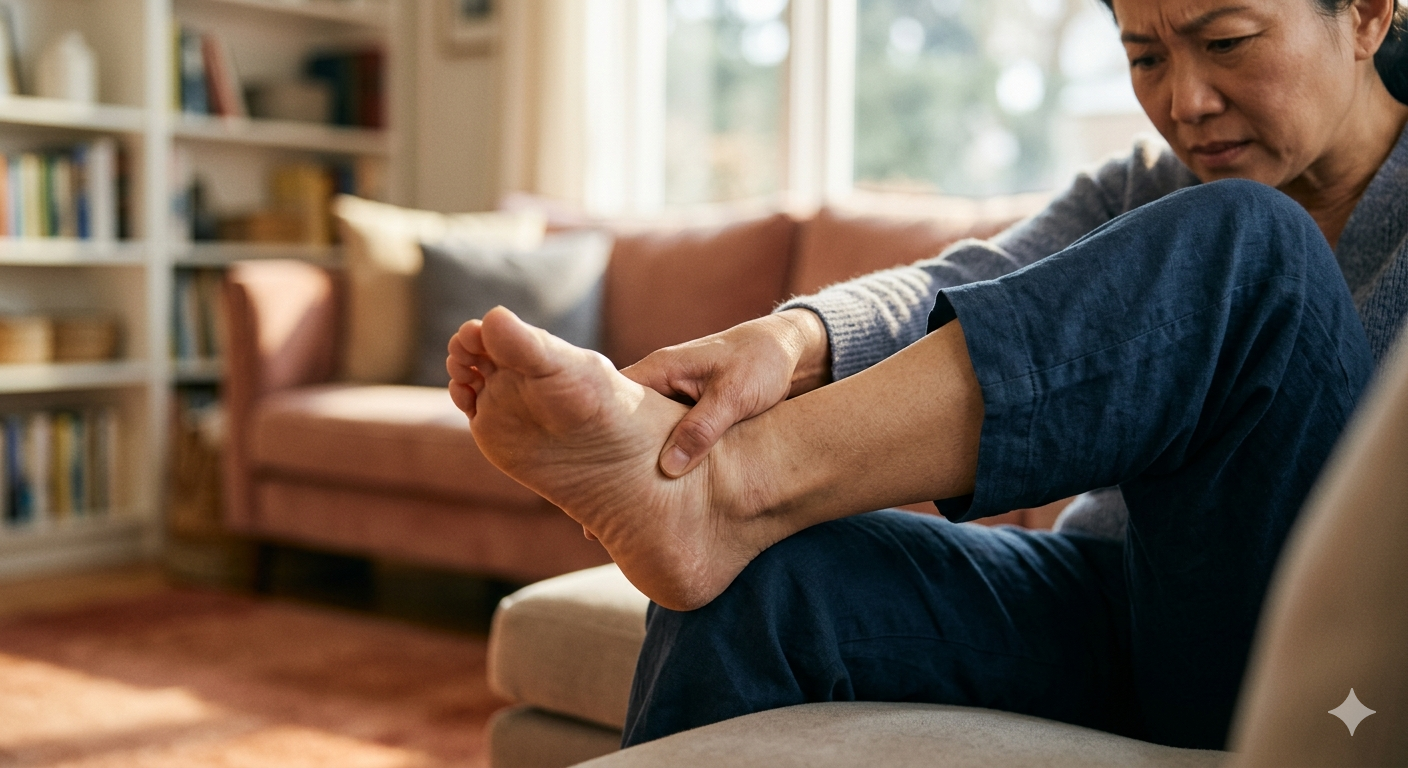
If your heel sends a sharp jolt of pain the moment you step out of bed in the morning, it may be more than simple fatigue. Repeated pain can change the way you walk and place extra strain on the knees, hips, or lower back. For middle-aged and older adults in particular, the cushioning and flexibility of the sole may decrease, so it is important to identify the likely cause early and adjust daily habits.
Sharp Foot Pain on the First Morning Step:
Plantar Fasciitis, Fat Pad Atrophy and Morton’s Neuroma
Plantar foot pain can have different causes depending on where and when it hurts. Heel pain on the first morning step may suggest plantar fasciitis, a bruised feeling in the center of the heel after standing may suggest fat pad atrophy, and burning or numbness in the forefoot may raise the possibility of Morton’s neuroma.
Plantar foot pain is not one single diagnosis; it is a symptom that can result from several overlapping causes. Plantar fasciitis is a common cause of heel and sole pain, and it is well known for being worse when taking the first steps after a period of rest. By contrast, fat pad atrophy often feels like a dull bruise in the center of the heel, while Morton’s neuroma is more associated with burning, tingling, or numbness around the ball of the foot and between the toes.
This article is not intended to help you diagnose yourself. Its purpose is to help you understand pain location and patterns so you can describe your symptoms more accurately during a medical visit and decide how to begin basic care such as footwear changes, stretching, and cold therapy. If pain is severe or keeps recurring for more than one to two weeks, it is safer to seek an accurate diagnosis from an orthopedics, rehabilitation medicine, podiatry, or foot-and-ankle specialist.
Basic Information About Plantar Foot Pain

Three Major Causes of Plantar Foot Pain
1. Plantar fasciitis
The plantar fascia is a thick band of tissue that runs from the heel bone toward the toes. When repetitive stress builds up in this area, pain can develop around the inner heel or the arch of the foot. The most characteristic symptom is a sharp, stabbing pain when taking the first step in the morning.
2. Plantar fat pad atrophy
The fat pad under the heel acts as a cushion that absorbs body-weight impact. With aging or repeated walking on hard surfaces, this cushion can become thinner and less elastic. In this case, the center of the heel often feels dull, sore, or bruised.
3. Morton’s neuroma
Morton’s neuroma is commonly described as a condition in which a nerve leading to the toes becomes irritated, compressed, or thickened in the forefoot. Narrow shoes, high heels, and pressure across the ball of the foot may contribute. Symptoms may include burning in the forefoot or numbness between the toes.
Several causes can overlap
Sometimes there is only one main cause, but plantar fasciitis, fat pad atrophy, forefoot compression, tight calf muscles, and weight gain can also act together. That is why it is important to consider pain location, shoe habits, and changes in activity level at the same time.

Distinguishing Causes by Pain Location
| Pain location | Possible cause | Typical features | Daily care direction |
|---|---|---|---|
| Inner heel and beginning of the arch | Plantar fasciitis | Sharp pain with the first morning step or the first steps after sitting for a long time | Calf and sole stretching, cold therapy, shoes with arch support |
| Center of the heel | Fat pad atrophy | Bruised-feeling pain when standing or walking for a long time on hard floors | Heel cushioning, indoor supportive slippers, less barefoot walking |
| Ball of the foot, especially between the third and fourth toes | Morton’s neuroma | Burning, electric-shock sensation, toe numbness, relief after removing shoes | Wide toe-box shoes, avoiding high heels, reducing forefoot compression |
| Entire sole | Overuse, shoe problems, weight-bearing strain | General soreness after standing for a long time or walking a lot | Activity adjustment, cushioned shoes, rest and stretching |
Four Everyday Ways to Ease Pain
1. Reduce barefoot walking and wear cushioned indoor footwear
When you have plantar foot pain, walking barefoot on hard floors can worsen symptoms. Wearing indoor shoes or slippers with heel cushioning and arch support can help reduce direct impact even at home. Heel cushioning is especially important when fat pad atrophy is suspected.
2. Roll a frozen water bottle for 10 to 15 minutes
Freeze a 500 ml water bottle, wrap it in a thin towel, place it under the sole, and roll it slowly. This may provide both cold therapy and a gentle massage effect. However, people with reduced skin sensation or diabetic neuropathy should consult a healthcare professional first because of the risk of cold injury.
3. Do a towel stretch before the first morning step
Before getting out of bed, sit up and loop a towel around the ball of the foot, then gently pull the toes toward your body. Hold the stretch for 15 to 20 seconds while feeling a pull in the calf and sole, and repeat three times. Loosening the plantar fascia and calf muscles before standing may help reduce first-step pain.
4. Temporarily reduce high-impact exercise and switch to low-impact options
Continuing running, hiking, jump rope, or other heel-impact activities while pain is present can slow recovery. During painful periods, consider lower-impact exercise such as stationary cycling, swimming, or walking in water, and increase activity gradually.
Why Shoe Choice Matters
For plantar foot pain, shoes are not a cure; they are a tool for reducing stress.
Soles that are too thin, narrow toe boxes, or old running shoes with worn-out cushioning can repeatedly load the sole. When pain is present, check for enough forefoot width, heel cushioning, arch support, slip resistance, and toe space.
When plantar fasciitis is suspected
Shoes with arch support and a stable heel counter are usually helpful. Even when choosing slippers, look for a structure that supports the sole rather than a pair that is so soft that the foot wobbles.
When fat pad atrophy is suspected
Cushioning that reduces heel impact is important. People who spend a long time walking on hard floors should pay attention not only to outdoor shoes but also to indoor footwear.
When Morton’s neuroma is suspected
Narrow, pointed, or high-heeled shoes can increase pressure on the nerves between the toes. Choose shoes with a wide forefoot and enough room in the toe area.
Signs You Should See a Healthcare Professional
Do not rely only on self-care if any of the following apply.
- Pain persists for more than one to two weeks or keeps getting worse
- Swelling, warmth, or redness occurs in the foot
- Toe numbness, decreased sensation, or weakness is present
- It is difficult to put weight on the foot after an injury
- You have diabetes, peripheral vascular disease, or a rheumatic disease
- Pain is severe at night, or unexplained weight loss or fever accompanies the pain
A 5-Minute Daily Sole Care Routine
| When | Method | Time | Precautions |
|---|---|---|---|
| Right after waking | Pull the toes back with a towel | 15 to 20 seconds, 3 times | Do not pull strongly if pain is severe |
| Morning | Wall calf stretch | 30 seconds on each side | Keep the heel from lifting off the floor |
| Evening | Roll a massage ball or frozen water bottle | 10 to 15 minutes | Use caution with cold therapy if sensation is reduced |
| Before bed | Curl and spread the toes; lightly massage the sole | 2 to 3 minutes | Do not press through sharp pain |
Frequently Asked Questions
Q. If the first morning step hurts, is it always plantar fasciitis?
A. It is a common pattern in plantar fasciitis, but it is not the only possibility. Fat pad atrophy, stress fracture, nerve problems, and joint disorders can also cause heel pain. If the pain keeps recurring, medical evaluation is recommended.
Q. Can I exercise when I have plantar foot pain?
A. During periods of significant pain, it is better to reduce high-impact activities such as running or hiking. Lower-impact options such as swimming, stationary cycling, or walking in water are usually safer.
Q. Can I use an ice-bottle massage every day?
A. A short 10- to 15-minute session may be helpful, but prolonged icing until the skin becomes numb can cause cold injury. If you have diabetes or reduced sensation, consult a healthcare professional first.
Q. Do slippers help plantar foot pain?
A. Not all slippers are helpful. Very thin or unstable slippers may increase strain. Check for heel cushioning, arch support, slip resistance, and adequate forefoot width.
Q. How can Morton’s neuroma be recognized?
A. Consider the possibility if symptoms are worse in the ball of the foot rather than the heel, especially burning or numbness between the third and fourth toes, and if narrow shoes make it worse. A definite diagnosis requires medical evaluation.
Final Thoughts
If plantar foot pain is ignored, it can alter walking patterns and place extra stress on other joints. The first step is to distinguish whether the pain is strongest with the first morning step, after prolonged standing, or as numbness in the forefoot.
The most practical care begins with shoes and daily habits. Avoid walking barefoot for long periods on hard floors, choose footwear that supports the arch and heel, and keep up with morning stretching and cold therapy. If pain keeps recurring or is accompanied by numbness, swelling, or altered sensation, seek professional care.
Review note
This article provides general health information about common causes of plantar foot pain and everyday management strategies. Individual causes may differ, including injury, nerve, vascular, or joint conditions, so this content does not replace a medical diagnosis. If symptoms persist or worsen, consult a healthcare professional.
Supportive shoes and insoles can also help reduce daily foot strain, so comparing related support items may be useful. View related foot support items
As part of affiliate activities, I may receive a small commission when qualifying purchases are made through links in this post.