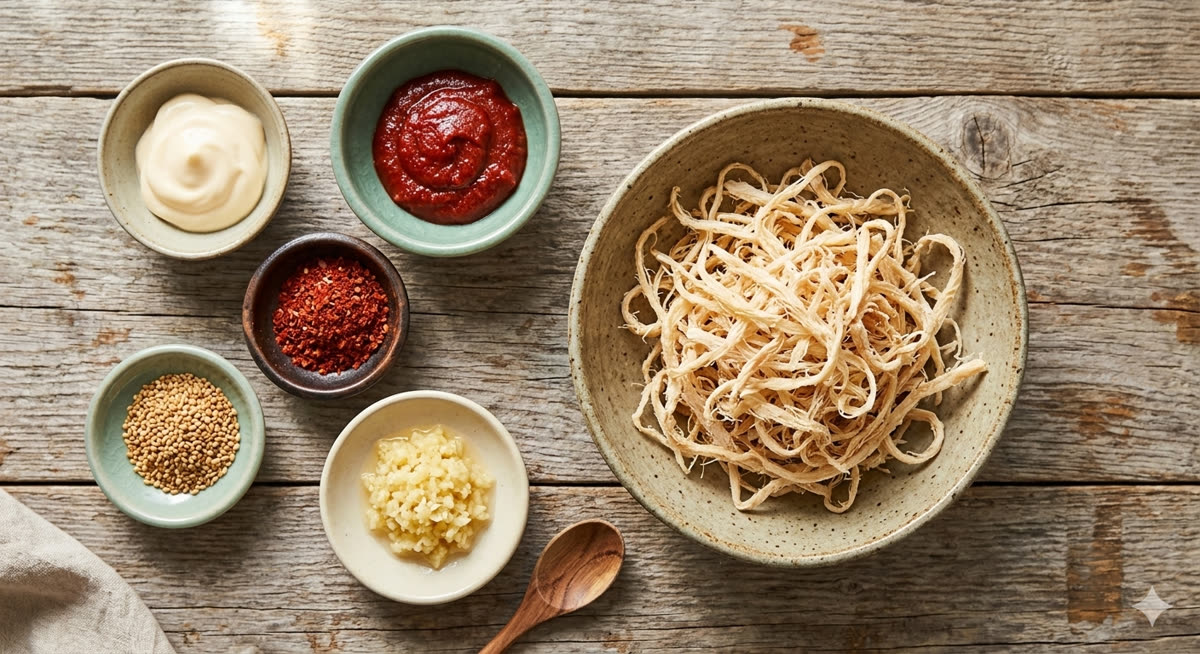
One reliable Korean side dish can make a simple rice meal feel complete. Jinmichae bokkeum, or spicy stir-fried dried squid strips, is a classic banchan that tastes sweet, spicy, and savory. The common problem is that it can become hard after refrigeration. The trick is to soften the dried squid strips first and mix them with a briefly boiled sauce instead of frying them for a long time.
This recipe uses a gochujang-based sauce and a mayonnaise pre-treatment. Tossing the squid strips with mayonnaise before adding the sauce helps keep them moist, while boiling the gochujang sauce separately gives the dish a cleaner, glossier finish.

Jinmichae bokkeum is one of the most common Korean lunch-box side dishes. A small spoonful is enough to make warm rice taste better because the sauce is sweet, spicy, and slightly chewy. It stores well in the refrigerator when made correctly, so it is useful for busy home meals.
Because jinmichae is already dried, moisture control matters more than long cooking. If you stir-fry it over high heat for too long, the strips become tough. If the sauce keeps boiling after the squid strips go in, the sugar and syrup can harden the texture.
The better method is simple: loosen and trim the squid strips, coat them lightly with mayonnaise, boil the sauce in a pan, turn off the heat, and then toss everything together. Finish with oligosaccharide syrup or corn syrup for a soft shine.
Basic information
| Dish | Jinmichae bokkeum, spicy dried squid strips |
|---|---|
| Type | Korean side dish, lunch-box banchan |
| Main ingredient | 200 g dried squid strips |
| Cooking time | About 15 minutes |
| Flavor | Sweet, spicy, savory, and lightly chewy |
| Main tip | Boil the sauce first, then toss the squid strips with residual heat |

For soft jinmichae bokkeum, do not keep stir-frying the squid strips. Coat them with mayonnaise, boil the sauce separately, turn off the heat, and toss the strips in the hot sauce. This keeps the texture tender even after refrigeration.
Ingredients
| Ingredient | Amount | Purpose |
|---|---|---|
| Dried squid strips | 200 g | Main ingredient |
| Mayonnaise | 1–2 tablespoons | Softens and coats the strips |
| Gochujang | 2 tablespoons | Main spicy sauce base |
| Korean chili flakes | 1 tablespoon | Color and spice |
| Minced garlic | 1 tablespoon | Aroma |
| Sesame seeds | To finish | Nutty garnish |
Sauce ratio
| Seasoning | Amount |
|---|---|
| Gochujang | 2 tablespoons |
| Soy sauce | 1 tablespoon |
| Sugar | 1 tablespoon |
| Oligosaccharide syrup or corn syrup | 1–2 tablespoons |
| Cooking wine | 1 tablespoon |
| Sesame oil | A small amount at the end |
How to make jinmichae bokkeum
1. Loosen the dried squid strips
Separate any clumped strips by hand and cut very long pieces into bite-size lengths. If the strips feel very dry, mist them lightly with water or rinse them quickly and drain well.

2. Coat with mayonnaise
Add mayonnaise and gently toss until the strips are lightly coated. This is the step that helps prevent a hard texture later.
3. Boil the sauce
In a frying pan, add gochujang, soy sauce, sugar, cooking wine, minced garlic, and syrup. Heat until the sauce bubbles and becomes glossy.
4. Turn off the heat and toss
Turn off the heat before adding the squid strips. Toss them with the hot sauce using residual heat only. This keeps the sauce from burning and the strips from becoming tough.
5. Finish with sesame oil and seeds
Add a little sesame oil and sesame seeds at the end. Mix lightly and let the dish cool before storing it.
Common problems and fixes
| Problem | Reason | Fix |
|---|---|---|
| Too hard | Cooked too long after adding the squid | Turn off the heat first and toss with residual heat |
| Sauce tastes separate | Sauce was not boiled first | Boil the sauce until glossy, then mix |
| Too salty | Too much soy sauce or reduced too far | Use more gochujang than soy sauce and avoid over-reducing |
| No shine | No syrup or syrup added too early | Add syrup while finishing the sauce |
Storage tips
Cool the finished side dish completely and store it in an airtight container. Use clean chopsticks or a clean spoon each time. For home cooking, it is best to eat it within several days while the texture and aroma are still fresh.
FAQ
Q. Why does jinmichae bokkeum become hard?
A. It usually becomes hard because it is cooked too long after the sauce is added. Use residual heat instead.
Q. Is mayonnaise necessary?
A. It is not mandatory, but it helps keep the dried squid strips softer and smoother.
Q. Can I make it less spicy?
A. Yes. Reduce the chili flakes and add a little more syrup or sugar to balance the sauce.
Final note
Soft jinmichae bokkeum is less about long stir-frying and more about the order of steps. Soften the squid strips, boil the sauce separately, and mix them together off the heat. That simple change makes the side dish glossy, flavorful, and easier to enjoy after refrigeration.
#KoreanFood #JinmichaeBokkeum #KoreanSideDish #Banchan #DriedSquid #GochujangRecipe #KoreanRecipe #LunchBoxSideDish