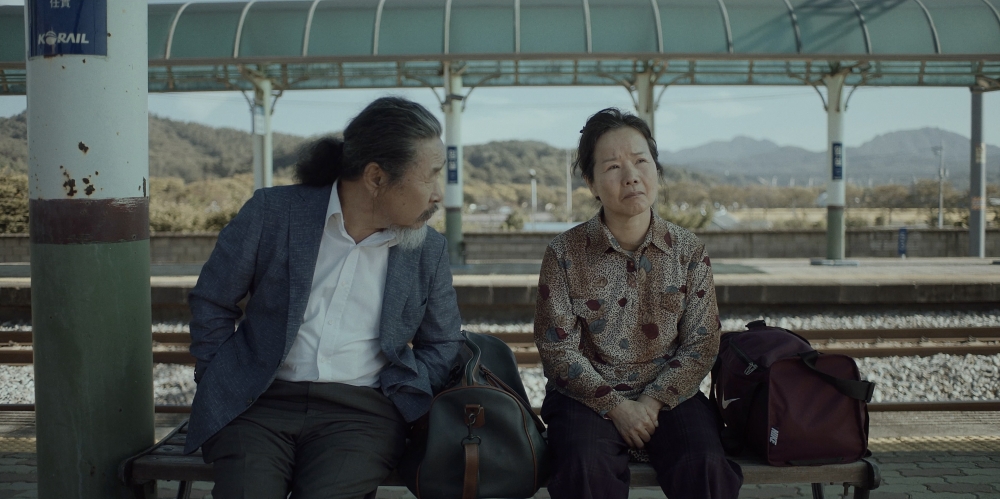
The Burglars

Opening in Korean cinemas on August 12, 2026, The Burglars is a Korean independent feature built around an unlikely pair, an aging van, empty country houses, and a journey with no declared destination. Eun-ja has settled into repetitive, listless days in a small rural community. Pal-bok travels through the countryside breaking into unoccupied homes. Their first encounter should logically separate them, yet it draws them together instead. Eun-ja becomes curious about the stranger and eventually joins his travels and his burglaries.
The criminal premise gives the story an edge, but the publicly available descriptions place the emotional emphasis elsewhere. This is a character-centered road movie mixing drama, comedy, and romance. Its central question is less about the value of stolen objects than about what two isolated older adults might recover when they share motion, risk, dawn, silence, and companionship. The film was made in 2025, screened at the 26th Jeonju International Film Festival, and arrives in its Korean theatrical version in 2026.
This guide is intended for readers who have not seen the film. It does not reveal the ending, predict a late twist, or present invented firsthand reactions. Every concrete production detail below is limited to information available through the Korean Movie Database, the Korea Media Rating Board, the Jeonju International Film Festival archive, and KBS Entertainment coverage.
Essential Information
| Category | Confirmed detail |
|---|---|
| Title | The Burglars |
| Korean theatrical release | August 12, 2026 |
| Production year | 2025 |
| Country | South Korea |
| Format | Color, feature-length fiction |
| Genre | Road movie; drama, comedy, and romance |
| Korean theatrical runtime | 93 minutes |
| Festival-version runtime | 96 minutes |
| Korean rating | Ages 15 and over |
| Director | Kim Taehwi |
| Screenwriter | Kim Taehwi |
| Editor | Kim Taehwi |
| Principal cast | Jeong Eahwa as Eun-ja; Gi Jubong as Pal-bok |
| Production companies | Pennyroyal Film and Take a Pebble |
| Korean distributor | Mano Entertainment |
Two runtimes appear in reliable records. The Jeonju festival archive lists a 96-minute presentation from 2025, while the Korean theatrical release information identifies a 93-minute version. Readers do not need to treat the difference as a contradiction. The clearest practical interpretation is that the festival presentation and the theatrical cut differ in length. For a current cinema visit, 93 minutes is the relevant theatrical figure; researchers looking at the festival archive will encounter the earlier 96-minute listing.
Story: An Unplanned Partnership on the Road
Eun-ja lives alone in a rural village, passing days that have lost much of their momentum. Public descriptions present her as bored and emotionally stalled rather than as a passive symbol of old age. A burglar enters her home, and the intruder turns out to be Pal-bok, a petty thief who drives an old van from one empty country house to another. Instead of closing the encounter through a conventional report, chase, or punishment, the story takes a stranger route. Eun-ja becomes interested in Pal-bok and begins helping him. Soon she is traveling beside him without a fixed destination.
The Jeonju program description emphasizes a dawn experienced inside Pal-bok's van. For Eun-ja, it feels unlike the mornings that came before it, and the journey allows her to rediscover parts of herself that had been left untouched for a long time. That detail provides a useful key to the film without giving away its conclusion. An empty house is fixed in place and marked by absence, whereas the van is unstable, temporary, and constantly capable of moving. By entering other people's vacant homes, the pair may also be confronting the vacancies in their own lives.
The premise should not be mistaken for a promise of a procedural crime thriller. There is inherent tension in entering a house illegally and in wondering whether the pair will be discovered, but the official genre information and festival framing focus on character, landscape, warmth, and an unusual relationship. The burglaries create risk and moral discomfort. They also push Eun-ja beyond the boundaries of her repetitive routine. The film can therefore examine liberation and wrongdoing at the same time without requiring the audience to approve of every choice.
What eventually happens to the partnership, why Pal-bok lives on the road, and whether their new energy can survive ordinary consequences are questions best left to the film. A spoiler-light introduction should preserve the uncertainty that makes the journey meaningful.
Cast and Characters
Jeong Eahwa as Eun-ja
Eun-ja begins as an older rural woman whose days appear drained of novelty and purpose. Her decision to follow Pal-bok is surprising precisely because it conflicts with the life she has been living. The dramatic interest lies not in pretending that she suddenly becomes young again, but in watching a person who had become emotionally stationary make risky, imperfect, self-directed choices.
Jeong Eahwa's role requires a careful balance. Eun-ja can be lonely without being reduced to helplessness, funny without becoming a caricature, and newly energized without erasing the years she has already lived. Her involvement in burglary is not a conventionally admirable act, yet it reveals appetite, curiosity, anger, and agency. Viewers may find it useful to hold judgment and empathy together: the behavior has consequences, while the emotional need beneath it remains worth understanding.
Small changes may matter more than speeches in a role like this. Watch how Eun-ja occupies the passenger seat, responds to unfamiliar places, looks at Pal-bok, or handles silence. A road movie often records transformation through posture, rhythm, and attention long before a character can explain it in words.
Gi Jubong as Pal-bok
Pal-bok is a petty burglar who moves through rural areas in an old van. KBS coverage describes an unusual pattern in his behavior: rather than clearing houses of everything valuable, he takes small amounts of money with less obvious traces and collects framed family photographs. That does not excuse the crime, but it complicates the image of a thief motivated only by profit. The photographs suggest an attachment to lives and relationships that do not belong to him. Exactly what that habit means should not be settled before watching the film.
Gi Jubong brings a long screen history and a deeply lived-in presence to the role. Pal-bok may need to appear rough, evasive, comic, observant, and lonely without turning into a collection of separate traits. The van is both his vehicle and his unstable home, so the actor's physical ease within that confined space can communicate how long Pal-bok has been living outside conventional domestic life. His reactions when another person enters that space may reveal as much as any explanation of his past.
The Relationship at the Center
The Jeonju archive praises the mature performances leading the film and describes the relationship as provocative and quietly tense. That combination is important. Eun-ja and Pal-bok should not be viewed only through a simple late-life romance label. Poverty, isolation, social usefulness, family absence, and the fear of becoming invisible all sit near their journey. At the same time, describing the film only as a social problem drama would flatten its humor, attraction, and sense of release.
The richer viewing approach is to allow both dimensions to remain present. The pair can be shaped by material hardship while still wanting pleasure. They can be old enough to understand consequences and still act impulsively. They can feel tenderness without gaining a guaranteed future. Their shared screen time, rather than a large external plot mechanism, is likely to supply the film's primary momentum.
Director and Creative Team
Kim Taehwi directed, wrote, and edited The Burglars. Those three responsibilities place the conception of the characters, the shape of the scenes, and the final rhythm of the journey under one guiding perspective. That does not mean every choice can be attributed to one person, but it makes the relationship between writing and pacing especially relevant. A pause that remains in the finished film, a landscape held for several seconds, or an abrupt transition between stops may be part of a consistent authorial design.
The Jeonju International Film Festival archive credits Lee Jeonghun with cinematography, Kang Jihyun with production design, Oh Eunha with the score, and Lee Sanghyuk with sound. The production companies are Pennyroyal Film and Take a Pebble, and Mano Entertainment handles Korean distribution. These details matter because a modest road film depends heavily on the integration of image, sound, objects, and performance. An old vehicle, a cassette, a roadside room, or the light before sunrise can carry narrative information that a larger production might deliver through exposition.
The film's rural spaces should also be understood as more than scenic decoration. The festival note highlights beautiful, warm landscapes and reads them as evidence of the director's affection for the characters. Countryside imagery can easily become either idealized nostalgia or a shorthand for decline. The more interesting possibility is that the film allows beauty and deprivation to occupy the same frame. A warm sunset does not solve housing insecurity, and a lonely road does not eliminate the excitement of movement.
Why the Title Matters
The title The Burglars names the pair through an action that society condemns. It is direct, almost blunt, and risks defining Eun-ja and Pal-bok by their worst behavior. Yet the story setup invites a second reading. They enter houses that are physically empty while carrying forms of emptiness themselves. The vacant properties hold traces of families, possessions, and ordinary routines. Pal-bok's interest in family photographs makes that connection especially suggestive, although viewers should avoid assuming a single explanation before the film provides one.
The plural form also matters. Pal-bok begins as the practiced thief, but Eun-ja crosses a boundary and becomes his partner. The title therefore marks a transformation in responsibility as well as companionship. She is not merely rescued by a mysterious man or carried passively through his adventure. She participates in choices that are freeing, troubling, and potentially consequential. That agency gives the story sharper moral and emotional contours.
Five Viewing Highlights
1. The Contrast Between Empty Houses and a Moving Van
The film's two central spaces point in opposite directions. A vacant house is stationary, structured, and full of evidence that someone is not there. The old van is cramped and insecure, yet it keeps creating new horizons. Eun-ja moves from a fixed life into a mobile one, and the spatial change may express her emotional reawakening. Notice whether the framing of doors, windows, seats, and roads changes as the pair becomes more familiar with each other.
2. A Character Drama Inside a Criminal Premise
Breaking into homes naturally produces suspense, but the available descriptions do not position the film as a fast investigation or action picture. The crimes operate as pressure: they expose need, test trust, and make temporary freedom dangerous. Viewers can ask how the film handles the ethical discomfort. Does humor soften it, sharpen it, or allow contradictory reactions at once? Does the story distinguish between understanding a character and endorsing an act?
3. Older Adults as Desiring, Fallible Protagonists
Eun-ja and Pal-bok are not confined to the roles of wise elders, burdens, patients, or objects of pity. They are curious, deceptive, attracted, stubborn, and capable of breaking rules. That full range is significant. A strong film about aging does not have to deny vulnerability; it can show vulnerability alongside appetite and self-determination. Watch whether the camera grants the pair privacy and dignity even when their behavior is awkward or foolish.
4. The Performance Rhythm of Jeong Eahwa and Gi Jubong
A two-person road narrative succeeds through timing. A delayed answer, an interrupted glance, a body turned toward the window, or an argument that loses its force can show a relationship changing. The Jeonju note specifically identifies the two seasoned performances as the engine of the film. Rather than waiting only for major declarations, pay attention to how the actors share silence and physical space.
5. Warmth Without Easy Security
The landscapes are described as beautiful and warm, but the characters' circumstances remain unstable. That tension may become one of the film's defining qualities. The van can feel intimate without becoming a permanent home. A dawn can renew Eun-ja without guaranteeing that the rest of her life will be transformed. Romance can be genuine without erasing poverty, age, or accountability. The film's emotional honesty may depend on preserving those limits.
Practical Checks Before Watching
- Release date: The Korean theatrical opening is August 12, 2026. Theater participation and showtimes can vary, so consult a current booking page before traveling.
- Runtime: Korean theatrical information lists 93 minutes. The 2025 Jeonju festival archive lists a 96-minute festival presentation.
- Rating: The Korean release is rated for ages 15 and over. The story includes criminal behavior and depictions connected to the characters' difficult lives. Viewers accompanying teenagers may wish to read the rating information first.
- Genre expectations: Expect a performance-led road movie blending drama, dry or situational comedy, and romance rather than a rapid burglary thriller.
- Spoiler control: Reviews may discuss the destination, the final stage of the relationship, or later consequences. Readers who value discovery should stop at the official premise before attending.
- Image label: The image linked with this draft comes from a KBS Entertainment article. It should be described as a press image or film image, not asserted to be the official theatrical poster.
Who May Appreciate This Film
The Burglars may appeal to viewers who value Korean independent cinema, restrained character observation, rural landscapes, and road movies driven by emotional movement rather than plot speed. It may also be a strong choice for audiences interested in stories that give older characters desire and moral complexity instead of reducing them to lessons for younger people. Admirers of Jeong Eahwa and Gi Jubong have a clear performance-based reason to seek it out.
Expectations matter. Someone primarily looking for elaborate heists, police procedure, or sustained action may find that the title suggests a different movie from the one described by the official materials. The burglaries are important, but they appear to serve the relationship and the themes of loneliness, mobility, and renewed feeling. Viewers comfortable with pauses, ambiguity, and observational detail are likely to be better aligned with its pace.
Questions to Carry Into the Screening
A preview can be more useful when it offers questions instead of predetermined answers. What does Eun-ja believe she is escaping, and what does she think she is moving toward? Does Pal-bok treat the van as freedom, necessity, or both? How does the film distinguish a house from a home? When the pair enters a stranger's empty property, does the space reflect aspiration, envy, grief, or simple opportunity?
It is also worth watching how the movie positions the audience morally. Are viewers asked to enjoy the thrill of the break-ins and then reconsider that enjoyment? Is affection between the characters presented as an answer to isolation or only as a temporary shelter? Does movement create real change, or does it postpone problems waiting at the end of the road? None of these questions requires a single neat response. Their value lies in keeping the film's humor, wrongdoing, tenderness, and social reality connected.
Frequently Asked Questions
When does The Burglars open in Korea?
The confirmed Korean theatrical release date is August 12, 2026. Current theater schedules should be checked directly because locations and screening times may change.
Was the film made in 2025 or 2026?
It was produced and presented as a 2025 film, including a screening record at the 26th Jeonju International Film Festival. Its Korean theatrical opening takes place in 2026. Both years can therefore appear in accurate listings, but they refer to different milestones.
Is the runtime 93 or 96 minutes?
The Korean theatrical version is listed at 93 minutes. The Jeonju festival archive records a 96-minute version. The most reasonable reading is that the festival and theatrical presentations are different cuts.
Who plays the main characters?
Jeong Eahwa plays Eun-ja, and Gi Jubong plays Pal-bok. Their partnership and destination-free journey form the center of the film.
Who directed the film?
Kim Taehwi directed the film and also wrote the screenplay and handled editing.
Is The Burglars based on a true story?
None of the verified sources used for this guide identifies it as a true-story adaptation. It should not be described as fact-based without additional official confirmation.
Is it a crime thriller?
Burglary creates tension and risk, but the verified genre and program descriptions point more strongly toward a character-led road movie combining drama, comedy, and romance. Audiences should not expect the structure of a conventional police procedural or elaborate heist film.
What is the Korean age rating?
The Korean theatrical release is rated for viewers aged 15 and over. Consult the Korea Media Rating Board entry if detailed classification guidance is important for a family viewing decision.
Can the connected image be called the official poster?
No such claim should be made on the basis of the collected evidence. The image is hosted by KBS Media and accompanied KBS Entertainment coverage of the film. It is safer and more accurate to label it a press image or film image.
Final Preview
The Burglars places two people commonly pushed toward the margins of commercial storytelling in the driver's seat. Eun-ja and Pal-bok do not become exemplary figures simply because the film cares about them. Their choices are illegal, their home on the road is fragile, and companionship cannot automatically repair every material or emotional loss. That lack of easy security is precisely what makes the premise compelling.
A vacant house may contain possessions and family traces but no immediate human presence. An old van may offer almost no stability yet hold two people sharing a new morning. Between those spaces, the film can ask what makes life feel inhabited. The answer is unlikely to be a stolen object or a simple romantic promise. It may emerge through movement, attention, laughter, conflict, and the risky recognition that another person sees you.
For a first viewing, it is best to leave the final destination unknown. Go in expecting the textured work of Jeong Eahwa and Gi Jubong, a rural road movie with an ethically uneasy premise, and a blend of loneliness and warmth rather than a conventional crime adventure. The most important discovery is not whether the pair can enter another empty house. It is what changes when they stop traveling through life entirely alone.
Sources
- Korean Movie Database: https://www.kmdb.or.kr/db/kor/detail/movie/K/39198
- Korea Media Rating Board: https://www.kmrb.or.kr/main/gd/grade/selectGradeInfo.do?category=MV&rcvNo=2582207&adult_yn=N&mi=1090
- Jeonju International Film Festival Archive: https://archive.jeonjufest.kr/db/movieView.asp?idx=5A6879EE75A441BEB
- KBS Entertainment: https://kstar.kbs.co.kr/list_view.html?idx=407490