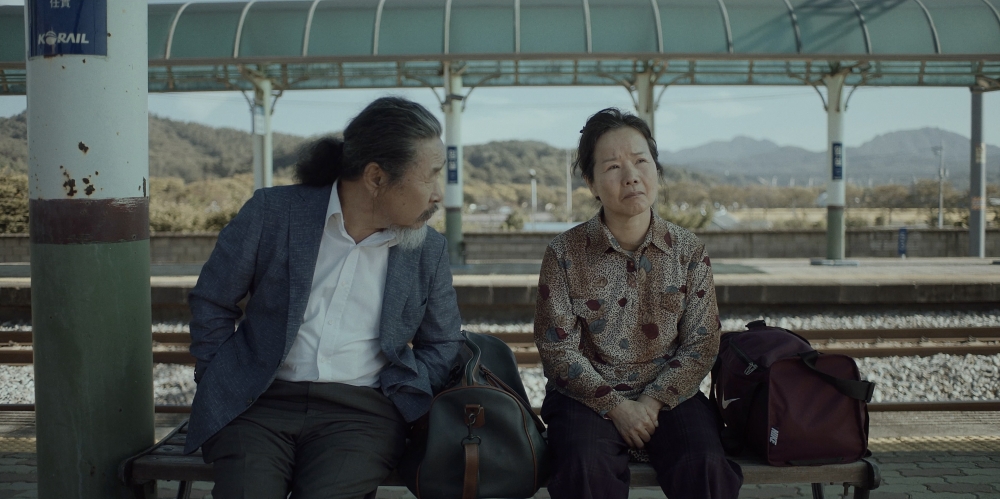
The Trap of Desire

KBS2 launched its new weekday drama The Trap of Desire on Monday, August 10, 2026, at 7:50 p.m. The series airs from Monday through Friday in the same evening slot and follows *Red Pearl*. Jang Seo-hee, Jeon Hye-won, Seol Jung-hwan, and Joo Sae-byeok lead the announced cast, with Lee Dae-kyung directing from a screenplay by Gu Ji-won.
The official premise describes a woman whose life is stolen after she is framed for murder. She then confronts an enormous structure of desire in order to restore the destiny taken from her. That language matters. This is not presented only as a story about punishing an enemy. It is a “destiny restoration” revenge drama, suggesting that clearing a name, reclaiming agency, rebuilding damaged relationships, and recovering an ordinary life may be as important as retaliation.
This guide gathers the confirmed broadcast details, explains the major cast-centered viewing points, outlines the dramatic questions created by the premise, and shows where to check official episode video. It does not identify an unannounced culprit or treat promotional clues as proof of a future twist.
Essential Information
| Category | Confirmed or Cautious Detail |
|---|---|
| Title | The Trap of Desire |
| Broadcaster | KBS2 |
| Premiere | Monday, August 10, 2026, at 7:50 p.m. |
| Regular schedule | Monday through Friday at 7:50 p.m. |
| Format | Weekday serial drama and destiny-restoration revenge story |
| Official premise | A woman framed for murder fights a vast force of desire after her life is taken from her |
| Previous program | Scheduled as the successor to Red Pearl |
| Director | Lee Dae-kyung |
| Writer | Gu Ji-won |
| Main announced cast | Jang Seo-hee, Jeon Hye-won, Seol Jung-hwan, Joo Sae-byeok, and others |
| Planned length | Reported as a one-hundred-episode plan, subject to schedule or production changes |
| Official destination | The KBS program website |
A weekday broadcast plan can change because of live sports, holiday programming, breaking news, or network decisions. Viewers who need the exact start time on a particular date should consult the current KBS schedule rather than relying only on the standing time slot. The planned episode count should also be understood as a production target, not an irreversible guarantee of the final total.
What the Title Suggests
The title combines two loaded ideas: desire and a trap. Desire can mean wealth or corporate power, but it can also take less obvious forms. A character may want exclusive love, social recognition, protection for a family, control over another person, or permanent silence about the past. A choice made in the name of protection can become destructive when it removes someone else’s freedom.
A trap likewise does not have to capture only the original victim. A person who creates a false story must keep feeding that story. A witness who accepts a reward for silence may become vulnerable to blackmail. A powerful family that hides one scandal may need to commit a second wrong to protect the first. In that sense, the structure built to imprison the heroine could eventually close around the people who designed it.
The destiny-restoration concept gives the premise an additional emotional layer. Proving innocence is a public and legal objective. Restoring a life is personal and much harder to measure. Even after the truth emerges, lost years cannot simply be returned, trust may not recover on command, and a damaged reputation can survive after a formal correction. The most meaningful victories may therefore be choices that allow the heroine to define herself again rather than choices that merely hurt an opponent.
Character and Cast Viewing Points
Jang Seo-hee: The Emotional and Strategic Center
Jang Seo-hee stands at the center of the drama’s strongest promise. The role calls for a wide emotional range: shock at being accused, isolation after losing social trust, anger at a stolen future, restraint while gathering facts, and the determination to enter spaces controlled by more powerful people. A convincing revenge protagonist needs more than rage. She needs a reason to keep moving when an immediate counterattack would be dangerous.
Weekday serials create power through accumulation. A glance that lasts too long, a question left unanswered, a name spoken with new formality, or a small piece of evidence hidden in an ordinary place can carry meaning across several episodes. Jang’s ability to make prolonged emotional pressure readable may be crucial. The eventual counterattack will feel stronger if viewers can see each compromise and each private cost that came before it.
Another key question is how the heroine distinguishes restoration from obsession. She may need allies, but using people as tools could make her resemble those who destroyed her. She may discover evidence, but releasing it immediately could place an innocent person at risk. Watching how she defines her moral boundary should be as important as watching whether she wins.
Jeon Hye-won: A Generation Facing Its Own Choice
Jeon Hye-won’s position in the central relationship map is likely to be important to the pace and emotional accessibility of the story. A younger character in a long-form family drama can inherit the consequences of an older generation without understanding their origin. Love, loyalty, career ambition, and family expectations may pull in different directions once hidden facts become impossible to ignore.
Rather than deciding too early that the character belongs to one side, viewers can watch what she fears losing and which questions she refuses to ask. Her first independent choice after learning an uncomfortable truth may reveal more than any formal introduction. If she changes from someone protected by an established order into someone willing to test it, that movement could become a major turning point.
The performance may also provide a useful contrast with the heroine’s heavier history. Where the older protagonist has already paid for other people’s decisions, the younger figure may still have time to choose whether she repeats them. That contrast can turn a family conflict into a wider question about whether harmful desire is inherited or interrupted.
Seol Jung-hwan: Trust Under Pressure
Seol Jung-hwan’s character can be watched through the theme of trust. Revenge dramas often include a potential ally who can enter places the protagonist cannot, obtain information, or challenge the dominant family from within. The more interesting version of that role has an independent stake. Supporting the heroine should cost him something, whether that is security, reputation, family approval, or a relationship he hoped to preserve.
If romance becomes part of the story, its value will depend on action rather than declarations. A person may promise belief when nothing is at risk, then retreat when evidence threatens his own world. Conversely, a skeptical character may become trustworthy by checking facts and making a difficult decision at the decisive moment. The difference between emotional loyalty and responsible trust can give the relationship real dramatic weight.
Viewers can pay attention to what information he receives first, what he keeps private, and whether his language changes depending on who is present. In a drama built around a false accusation, the choice to listen before judging is not a minor virtue. It is a direct answer to the mechanism that ruined the heroine’s life.
Joo Sae-byeok: A Variable Inside the Structure of Desire
Joo Sae-byeok’s character is a promising variable in the drama’s network of desire. The obvious antagonist is not always the person who created the original design. Someone may appear aggressive because she is protecting a secret, while a calmer figure benefits from every conflict. A character may also carry both victimhood and responsibility, having suffered under a system while helping that system harm someone else.
The most revealing moments may come under pressure. Whom does she protect first? Which relationship becomes expendable? What fact is she willing to admit, and what fact must remain buried at any cost? Those decisions can show whether her primary desire is love, status, survival, approval, or control.
A layered rival needs an emotional logic even when her actions are indefensible. Social anxiety, deprivation, fear of abandonment, or distorted family loyalty can make an antagonist understandable without excusing the damage she causes. Joo’s shifts in emotional temperature and alliance may help prevent the conflict from becoming a simple contest between pure good and pure greed.
Revenge-Drama Highlights to Watch
1. The Evidence That Can Break the Murder Frame-Up
The false murder accusation is the engine of the story. The decisive question is not only who lied, but how the lie became credible. Was an investigation redirected? Did a witness change a statement? Was a record removed, altered, or presented without context? Who gained time, money, authority, or protection after the heroine was blamed?
Long-form mysteries often plant answers in repeated ordinary details. Dates, photographs, vehicle movements, security footage, phone records, contracts, medical information, or a phrase repeated by different characters can become important later. Viewers can enjoy tracking these elements while remembering that an online theory is not the same thing as an officially revealed fact.
2. Individual Greed Versus Institutional Power
The official premise says the heroine faces an enormous desire, wording that points beyond a single impulsive villain. A family, company, or influential network may have reasons to preserve the original accusation. One person can commit the first wrong, but many people may help maintain it because the truth threatens their comfort.
This structure creates several kinds of conflict. A low-level participant may know the truth but fear unemployment. A relative may call silence an act of family protection. A leader may manipulate law, publicity, or reputation while remaining personally distant from the harm. The drama can become especially compelling when each participant has a different justification for serving the same false order.
3. Restoration Versus Retaliation
The heroine’s two goals may eventually conflict. Retaliation rewards speed and emotional impact. Restoration requires evidence, patience, credible allies, and decisions that can survive public scrutiny. A spectacular exposure might feel satisfying but damage someone she wants to protect. A private settlement might recover material loss while leaving her name stained.
The series can ask whether a person can defeat a corrupt system without adopting its methods. It can also ask whether forgiveness is meaningful before accountability, or whether refusing forgiveness can become another prison. These questions do not weaken the pleasure of revenge. They give each victory a consequence.
4. The Rhythm of a Monday-to-Friday Serial
A five-day schedule produces a distinctive narrative rhythm. Monday can open a new confrontation, the middle of the week can widen an information gap, and Friday can end with a revelation or irreversible choice. Small developments accumulate quickly, so a viewer who misses several nights may return to a significantly changed alliance.
For viewers who prefer weekly batches, the official episode list can help identify a complete set of broadcasts. For viewers watching each night, comparing what different characters know at the end of an episode can be more useful than trying to predict every twist. Suspense often comes from information asymmetry: the audience knows a danger that the heroine does not, or the heroine holds evidence that the antagonist has not yet discovered.
5. Performance Duels Rather Than Plot Alone
A revenge serial succeeds when confrontations have emotional history. Jang Seo-hee’s central performance will gain force from the different responses created by Jeon Hye-won, Seol Jung-hwan, and Joo Sae-byeok. Two people can remember the same event differently because one experienced loss while the other experienced opportunity.
Important changes may be quiet. A family title can become a formal name. A seat at a dining table can signal exclusion. An unanswered call can announce a broken alliance. A character who usually interrupts may suddenly listen because new evidence has shifted the balance. These details allow the cast to turn exposition into living conflict.
6. The Cost of Keeping a Secret
The original false accusation cannot remain stable without maintenance. Someone must hide a document, influence a witness, monitor the heroine, or control the public version of the past. Every act of maintenance increases risk. The people who once shared an interest may begin to distrust one another, making the alliance behind the lie vulnerable from within.
A useful viewing question is not simply “Who knows?” but “What does each person believe the others know?” Misjudging that difference can trigger confession, betrayal, or preemptive attack. The trap may fail because its builders become more afraid of one another than of the woman they framed.
Broadcast and Official Replay Check
The regular television slot is KBS2, Monday through Friday at 7:50 p.m., beginning with the premiere on August 10, 2026. Special programming and live events can alter a daily schedule, so viewers should check the current KBS timetable on the day of broadcast when timing is important.
For missed episodes, visit the official KBS program website for *The Trap of Desire* and open its episode or replay area. KBS provides the authoritative place to check whether episode video is listed. Availability timing, sign-in requirements, free or paid access, advertising, quality, and regional restrictions can vary, so the current notice shown on the official page should control.
This guide does not promise detailed availability on Wavve or any other outside streaming platform. Distribution rights, upload timing, subscription tiers, and regional access can change independently. Until a service or broadcaster posts a clear current notice, it is safer to avoid treating third-party search snippets as confirmation.
When selecting an official video, compare both the episode number and the original broadcast date. Program pages may also contain previews, highlights, interviews, and short clips whose titles resemble full episodes. Unofficial uploads can disappear without notice and may offer poor quality or infringe rights; the broadcaster’s official route is the safer reference.
International viewers should expect possible regional limits. A page being visible does not necessarily mean its video player is licensed in every country. The program website remains useful for official summaries, notices, images, and episode identification even when playback differs by location.
Who May Enjoy This Drama
- Viewers who like long-form revenge stories built around a false accusation and a gradual search for proof.
- Viewers who prefer a female protagonist reclaiming her name and agency rather than remaining defined by victimhood.
- Fans of weekday family dramas in which romance, corporate interest, kinship, and reputation intersect.
- Viewers interested in Jang Seo-hee’s sustained emotional performance and tense cast confrontations.
- People who enjoy either a short episode each weekday or a full week of episodes in one weekend batch.
The series may be less suited to someone seeking a fully resolved mystery in a few episodes. Its planned serial scale allows suspicions, alliances, and emotional debts to develop over time. That slower accumulation is part of the format’s appeal.
Frequently Asked Questions
When did The Trap of Desire premiere?
It premiered on KBS2 on Monday, August 10, 2026, at 7:50 p.m. Its regular schedule is Monday through Friday at 7:50 p.m., although exceptional programming can change an individual broadcast.
What is the drama about?
It is a destiny-restoration revenge drama about a woman whose life is taken after she is framed for murder. She confronts a vast structure of desire as she tries to reclaim her fate. Specific culprits and unrevealed twists should be learned from the broadcast and official episode information.
Who are the main cast and creators?
The announced leading cast includes Jang Seo-hee, Jeon Hye-won, Seol Jung-hwan, and Joo Sae-byeok. Lee Dae-kyung directs, and Gu Ji-won writes the screenplay.
What aired before it?
The drama entered the KBS2 weekday schedule as the successor to *Red Pearl*.
How many episodes will there be?
A one-hundred-episode plan has been reported, but plans can change because of production or broadcast circumstances. The final total should be checked against later KBS scheduling and official program notices.
Where can I check full-episode replay information?
Use the episode or replay section of the official KBS program website. It is the appropriate source for current KBS video listings and access conditions. Detailed availability on outside streaming services should not be assumed without a current official notice.
Is Wavve availability confirmed?
This article does not make that claim. Streaming catalogs, subscription conditions, and upload schedules can change. Check a current official listing from the broadcaster or the service before relying on it.
Is the evening time guaranteed every weekday?
It is the regular slot, not a promise that no exception will ever occur. Sports, holidays, special broadcasts, or network decisions can produce a delay, cancellation, or time change. The same-day KBS schedule is the best final check.
A Spoiler-Safe Early Viewing Strategy
During the opening episodes, build a simple timeline rather than choosing a culprit immediately. Note when the alleged crime occurred, who says they were present, which statements come from direct observation, and which are merely repeated from another person. Separate confirmed actions from characters’ interpretations.
Next, track incentives. Ask who gained security after the accusation, who lost freedom, and who now has the power to suppress a correction. A person can tell the truth about one detail while lying about the larger context. A witness can also be honestly mistaken if information was staged for that person to see.
Finally, watch for the heroine’s definition of success. If she only wants an enemy to suffer, every escalation can look useful. If she wants her identity and relationships restored, some apparently satisfying actions may become unacceptable. That difference is where the destiny-restoration premise can distinguish the series from a simpler revenge plot.
Final Thoughts
*The Trap of Desire* begins with a familiar but powerful injustice: an innocent woman loses her life as she knew it because of a murder frame-up. Its more distinctive promise lies in what follows. The heroine must confront not only whoever caused the accusation, but the larger desire that allowed the lie to survive. She also has to decide what recovery means when time and trust cannot be replaced as easily as a legal record can be corrected.
With Jang Seo-hee anchoring the struggle and Jeon Hye-won, Seol Jung-hwan, and Joo Sae-byeok positioned around a changing field of loyalty and ambition, the series has room for both strategic reversals and sustained emotional clashes. The most rewarding question may not be who falls into the trap first, but whether the heroine can close it without remaining inside it herself.
For the latest schedule, episode identification, notices, and official replay listings, use the KBS program website. Treat the planned episode count as changeable, verify day-specific scheduling when necessary, and avoid assuming unannounced streaming details.
Sources
- Official KBS program website for *The Trap of Desire*: https://program.kbs.co.kr/2tv/drama/yokmang/pc/index.html
- Official KBS key art: https://programres.kbs.co.kr/t2026-0209/2026/7/23/1784765523452_655013.jpg