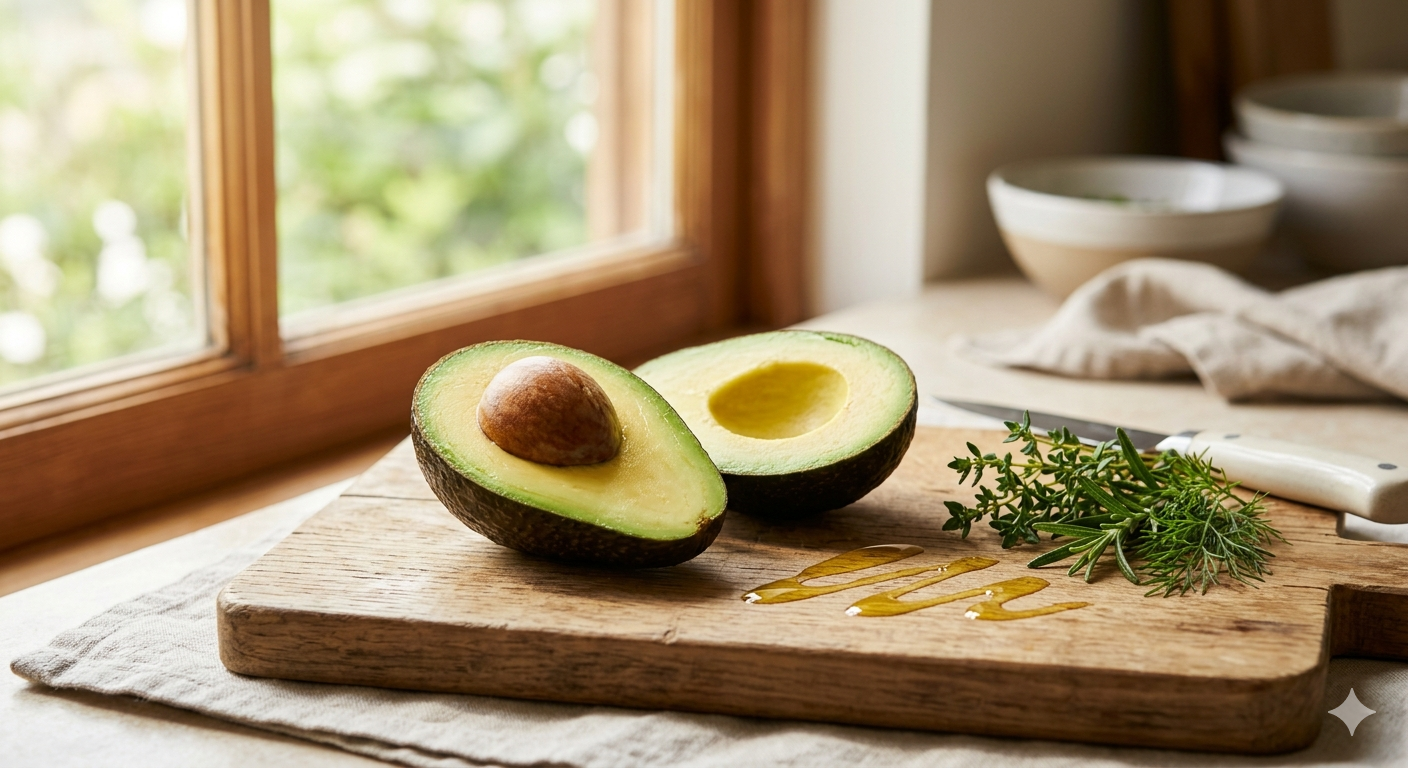
Avocado has a strong healthy-food image, but once you try to eat it every day, calories and fat content can become a concern. It looks light on a salad, yet the total calories can rise quickly when bread, dressing, cheese, or sauces are added. So the real question is not simply whether avocado is good or bad. The more important point is what you reduce and what avocado replaces in your meal.
Avocado Benefits and Side Effects
Will Eating It Every Day Make You Gain Weight?
Avocado is rich in fiber, monounsaturated fat, potassium, folate, vitamin K, and plant pigments. However, compared with many fruits, it is relatively high in calories and fat. The key is portion control and using it as a replacement, not adding a large amount on top of your usual meals.
Avocado is often called “forest butter” because its flesh is soft, creamy, and rich in fat. Unlike many fruits, a large share of its calories comes from fat rather than carbohydrates.
Most of that fat is plant-based unsaturated fat. That means avocado can improve the quality of a meal when it replaces foods high in saturated fat, such as butter, mayonnaise, or cream cheese. But if your usual meal stays the same and avocado is simply added on top, total calorie intake can increase.
One more point is worth noting. Online, avocado is sometimes described as “the most nutritious fruit in the world,” but what is clearly found in Guinness World Records is that avocado is known as the most calorific fruit. In other words, avocado is nutrient-dense, but it is not a low-calorie fruit that can be eaten freely without thinking about the amount.
Basic avocado information

Avocado nutrition and calorie calculation
The edible weight of an avocado changes depending on size and variety. That is why it is more accurate to calculate by 100 g rather than assuming one avocado always has the same calories.
| Basis | Calculation | Meaning |
|---|---|---|
| 100 g | About 160 kcal | Higher in calories than many fruits |
| Half, about 75–100 g | About 120–160 kcal | A reasonable amount for one salad or toast serving |
| One, about 150 g | About 240 kcal | Closer to a meal ingredient than a light snack |
| Large one, about 200 g | About 320 kcal | Can approach the calories of a bowl of rice |
| Fiber in 200 g | About 13.4 g | Helpful for fullness and gut health |
| Fat in 200 g | About 29.4 g | Healthy fat still increases total calories when the amount is high |
Main benefits of avocado
First, it provides fats that are favorable for heart health. Most avocado fat is plant-based unsaturated fat. Replacing foods high in saturated fat with avocado can improve the quality of dietary fat, although avocado itself should not be treated as a cure for disease.
Second, it may help you feel full for longer. Because avocado contains both fat and fiber, it can help maintain satiety after a meal. A moderate amount may reduce the desire for extra snacks or dessert.
Third, it is a good source of dietary fiber. With about 6.7 g fiber per 100 g, avocado is relatively high in fiber among fruits. Fiber supports gut bacteria and regular bowel habits.
Fourth, it is rich in potassium. Avocado provides about 485 mg potassium per 100 g. Potassium is important for fluid balance and blood pressure management, especially in diets high in sodium. However, for people with reduced kidney function, this can be a risk rather than a benefit.
Will eating avocado every day make you gain weight?
The answer is clear. If total calories increase, weight gain can happen. If avocado replaces other high-calorie foods, it can support better weight management. Avocado is not a food that automatically causes weight loss. Its effect depends on the role it plays in your overall diet.
| How you eat it | Weight-control view | Example |
|---|---|---|
| Added to the usual diet | More likely to increase calories | Eating rice, bread, and dessert as usual, then adding a whole avocado |
| Used instead of fatty sauce | Helpful for improving meal quality | Replacing part of mayonnaise, butter, or cream cheese |
| Used with reduced carbs | Helpful for fullness | Reducing bread and pairing half an avocado with an egg |
| Overloaded on salad | Can still raise calories | Adding avocado, nuts, cheese, and rich dressing all together |
Practical portion guide: If weight control is the goal, start with about half an avocado a day. One whole avocado may be reasonable when activity level is high or when it is the main ingredient of a meal, but other fats or carbohydrates should be adjusted accordingly.

Side effects and who should limit avocado
People with kidney disease need caution. Avocado is high in potassium. If kidney function is reduced, potassium may not be cleared properly, increasing the risk of high blood potassium. Anyone on a potassium-restricted diet should ask a doctor or clinical dietitian before eating it often.
People with latex allergy should watch for reactions. Some people with latex allergy may react to avocado, banana, kiwi, or chestnut. Stop eating it and seek medical care if itching around the mouth, hives, lip swelling, or breathing difficulty occurs.
People with sensitive digestion may need smaller portions. Because avocado contains both fat and fiber, eating a large amount at once can cause bloating, heaviness, or diarrhea. If you are new to avocado, start with one-quarter to one-half.
Do not mistake it for a low-calorie fruit. Avocado provides good fats, but the calories are not low. Even healthy fat can contribute to body fat gain when total intake exceeds your needs.
Recommended ways to eat avocado
Avocado egg toast
Spread half a mashed avocado on one slice of whole-grain bread and add a boiled or poached egg. Reduce butter and mayonnaise to keep the meal balanced.
Avocado rice bowl
Use slightly less rice, then add half an avocado, a small amount of salted pollack roe if desired, and an egg. Be careful with salty toppings.
Salad fat replacement
On days when avocado is added, avoid adding a lot of cheese, bacon, nuts, and creamy dressing all at once. Choose only one or two fatty ingredients.
Be careful with smoothies
Avocado smoothies can become high in calories if milk, honey, syrup, or sweet toppings are added. Keep sweet ingredients minimal.
Frequently asked questions
Q. Can I eat avocado every day?
A. A healthy adult can eat a moderate amount daily. However, adding one whole avocado every day may increase calories, so using about half as a replacement within a meal is safer.
Q. Is avocado a diet food?
A. It is not low in calories. But because it is rich in unsaturated fat and fiber, it can fit into a weight-management diet when it replaces butter, mayonnaise, or other high-calorie items.
Q. How many calories are in half an avocado?
A. If the edible portion is about 75–100 g, it is roughly 120–160 kcal. Larger avocados can be higher even when you eat only half.
Q. Can people with kidney disease eat avocado?
A. They should be careful because avocado is high in potassium. Anyone with reduced kidney function should follow medical or dietitian advice.
Q. What if my mouth itches after eating avocado?
A. An allergy may be involved. This is especially important if you also react to latex, banana, kiwi, or chestnut. Stop eating it and consider allergy care.
Final thoughts
Avocado is a nutritious food rich in fiber, potassium, and monounsaturated fat. But it is also relatively high in calories and fat for a fruit. If you want to eat it every day, portion control is the key.
For weight management, use about half an avocado as a starting point and let it replace butter, mayonnaise, cheese, or rich dressing rather than adding it on top of everything else. When you remember that even healthy foods can lead to weight gain if total intake is too high, avocado can be a useful and satisfying ingredient.
Related reading: More K-Culture and lifestyle posts