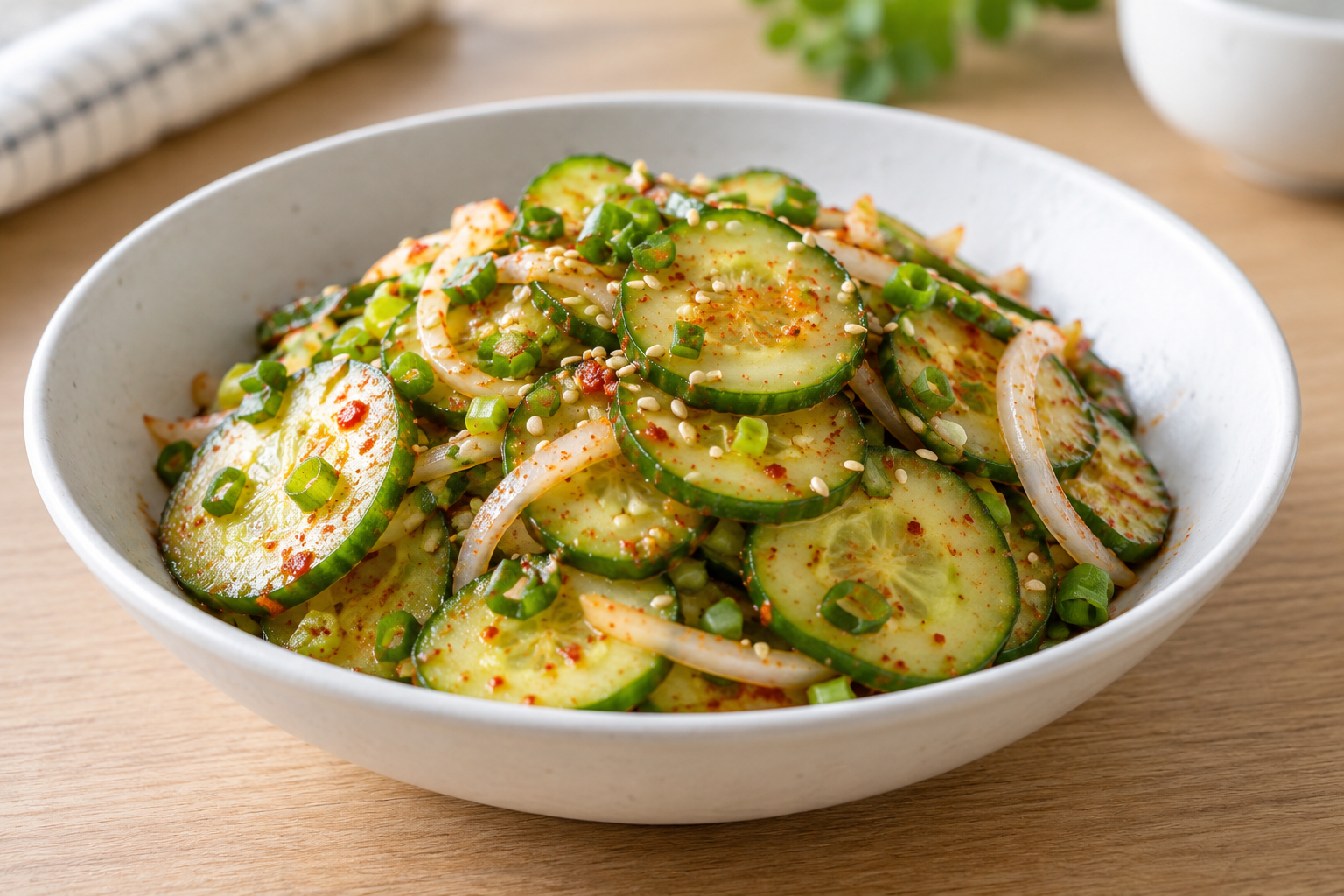
Oi muchim (오이무침) is a Korean cucumber side dish tossed with a chili, vinegar and sesame dressing. This small-batch guide starts with 300g of trimmed cucumber and focuses on draining and seasoning control. It is a freshly dressed side dish, not a fermentation or long-term pickling recipe.
Yield: a small side dish for 2–3 people · Estimated time: 20–25 minutes, including about 15 minutes of salting. Serving size and preparation time depend on the rest of your meal. Use a 15mL tablespoon and a 5mL teaspoon.
The quantities below are a starting formula to adjust, not a personally tested cooking review. All four images are AI-generated illustrations. Measure from the ingredient table rather than the quantities pictured.
Ingredients for 300g of cucumber

| Ingredient | Amount | Notes |
|---|---|---|
| Cucumber | 300g / about 10.6oz, after washing and trimming | Use Korean, Persian or English cucumber; slice 3–4mm / about 1/8 inch thick |
| Onion, optional | 30g / about 1oz | Slice very thinly |
| Scallion | 10g / about 0.35oz | Finely chop |
| Salt | 3g, for salting | Roughly 1/2 teaspoon; crystal size changes spoon measurements |
| Gochugaru | 2 teaspoons | Start with 1 teaspoon for less heat |
| Regular soy sauce | 5mL / 1 teaspoon | Taste the drained cucumber before adding the full dressing |
| Unseasoned rice vinegar | 15mL / 1 tablespoon | Seasoned vinegar already contains added flavorings |
| Sugar | 4g / roughly 1 teaspoon | Adjust sweetness after tossing |
| Minced garlic | 5g / roughly 1 teaspoon | Freshly minced or plain prepared garlic |
| Toasted sesame oil | 5mL / 1 teaspoon | Check allergy and ingredient labels |
| Toasted sesame seeds, optional | 1 teaspoon | Check allergy labels; omit with sesame oil if unsuitable |
Choosing cucumber and gochugaru outside Korea
Weigh the cucumber after trimming: “one cucumber” can mean very different amounts. Slender Korean or Persian cucumbers and English cucumber are practical options. If a cucumber has a large, soft seed core, remove that part and then weigh 300g. Thinly sliced onion is optional.
Gochugaru is Korean red chili pepper flakes or powder. Products vary in heat and grind, so begin with less if you are unsure. Gochujang is a fermented paste rather than a direct spoon-for-spoon replacement; it changes salt, sweetness and consistency. Omitting gochugaru gives a milder variation with a different flavor.
1. Wash and slice evenly
Start with clean hands, a knife, a board and a colander. Wash the cucumber under running water, trim the ends and cut into 3–4mm rounds, roughly 1/8 inch. Slice the onion thinly and chop the scallion. Do not reuse utensils that handled raw meat or fish without cleaning them first.
2. Salt for about 15 minutes, then drain
Toss the cucumber with 3g of salt and leave for about 15 minutes. Transfer to a colander and drain the released liquid. Avoid wringing or squeezing hard, which can damage the slices. Taste a drained piece: if it is overly salty, rinse lightly, drain thoroughly and reduce the soy sauce in the dressing.

3. Mix the dressing and toss gently
Combine gochugaru, vinegar, sugar and garlic in a separate bowl. Add soy sauce according to the saltiness of the drained cucumber and hold back some dressing for adjustments. Gently toss with cucumber, onion and scallion, then add sesame oil and seeds. Before adding water, check the moisture released by the cucumber after tossing.

4. Taste, adjust and serve
Taste a piece before adding the reserved dressing. For more acidity, add vinegar one teaspoon at a time. Add only a little extra sugar if needed. If the salad is already too salty, do not add more soy sauce; consider adding some freshly washed, well-drained cucumber. The adjustment amount depends on the batch.

Troubleshooting: watery, salty or too spicy
Too watery? Check the draining step and taste before adding more seasoning. The slices can release more liquid over time, so dress a small amount close to serving. Too spicy? Use one teaspoon of gochugaru next time, or omit it for a mild variation. Too salty? Account for both salting salt and soy sauce; the final taste is more useful than automatically adding every spoonful.
Scaling and using the rest of the cucumber
Buying 600g and using 300g leaves 300g before allowing for trimming losses. Keep the unused portion according to its storage instructions rather than dressing everything at once. To double the recipe, start with 600g cucumber, 60g onion and 20g scallion, and double the other starting quantities while reserving part of the soy sauce and chili for final adjustment.
Ingredient labels and storage
Check ingredient and allergy labels on soy sauce, sesame oil, sesame seeds and chili products. Some soy sauces contain wheat. If you need a gluten-free or vegan version, verify the actual labels of every relevant ingredient; a substitution name alone does not guarantee suitability or identical seasoning strength.
Prepare a portion to serve soon. Put leftovers in a clean covered container and refrigerate promptly. The UK Food Standards Agency’s general guidance calls for refrigerating salads, keeping the fridge at 0–5°C, and eating leftovers within 48 hours. This is not a safety guarantee regardless of ingredient condition or handling. Follow ingredient use-by dates and storage instructions. Adding more vinegar or salt does not turn this recipe into a shelf-stable preserve.
References and another Korean side dish
Korean Bapsang — Oi Muchim: consulted for the basic salting, draining and gentle-tossing technique. The author has not tested or endorsed the gram-based formula in this article.
UK Food Standards Agency — How to chill, freeze and defrost food safely: general refrigeration and leftover guidance. Sources checked on October 14, 2026.
For another side dish, see Gamja Jorim: Korean Soy-Braised Potatoes. 한국어 레시피 보기 →
답글 남기기