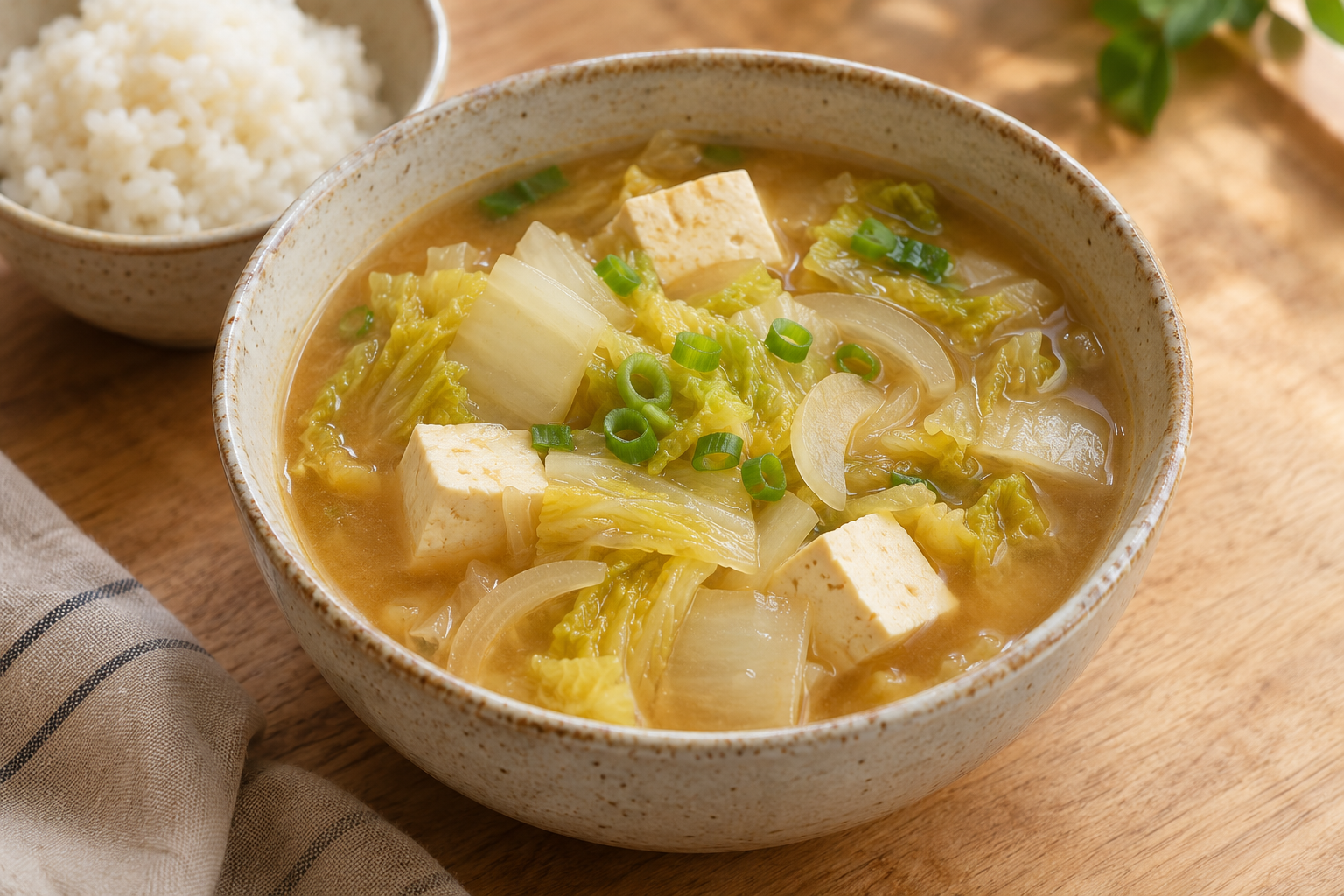
This baechu doenjang guk pairs tender napa cabbage with tofu in a light Korean soybean-paste broth. It is a soup to serve beside rice, not a heavily reduced stew. Start with a modest amount of doenjang and make the final seasoning decision after the cabbage softens.
Yield: 2–3 servings with rice · Estimated time: 10 minutes to prepare and about 20 minutes to cook. Cabbage thickness and burner strength affect the timing.
The four images are AI-generated cooking illustrations, not photographs of a tested batch. Follow the written measurements rather than estimating quantities from the pictures.

Ingredients
- 300g napa cabbage, weighed after removing the base and damaged leaves
- 200g firm tofu
- 80g onion
- 20g scallion
- 800ml water
- 1½ tablespoons doenjang, plus optional ½-teaspoon increments to taste
- 1 teaspoon minced garlic
Use a 15ml tablespoon and a 5ml teaspoon, with level rather than heaped spoonfuls. Doenjang is Korean fermented soybean paste; brands vary considerably in saltiness. Do not add salt or soy sauce at the start. Check labels for soy and, in some pastes, wheat or other allergens.
1. Prepare the cabbage for even cooking
Rinse between the cabbage leaves under running water and drain. Cut into roughly 3cm pieces, keeping thick white stems separate from the leafy pieces. Cut especially broad stems a little narrower. Dice the tofu into approximately 2cm pieces, thinly slice the onion and chop the scallion.

2. Build the broth and soften the stems
Bring 800ml water to a boil in a saucepan. Loosen 1½ tablespoons doenjang with a little hot broth, then stir it into the pot. Add the cabbage stems and onion. Once bubbling again, lower to a gentle simmer for about 5 minutes. Add the leafy cabbage and simmer for another 5–8 minutes. Keep the lid slightly ajar and watch for boiling over.
3. Add the tofu without breaking it
Add the tofu and garlic and simmer for about 5 more minutes. Move the ingredients gently with a ladle instead of stirring vigorously. Check a thick piece of cabbage: it should bend easily when pressed with chopsticks and be comfortable to chew. If it remains firm, add a little water if needed and cook a few minutes longer.

4. Finish and adjust the seasoning
Add the scallion and simmer for 1–2 minutes. Spoon a little broth into a small dish, let it cool enough to taste, then judge the seasoning. For a stronger flavor, dissolve an extra ½ teaspoon of doenjang at a time and simmer again. If too salty or overly reduced, add hot water in 50ml increments. These additions are optional, not a requirement to use all the paste or water.

Troubleshooting and substitutions
- Firm stems but soft leaves: cut the stems smaller next time and give them a head start.
- Crumbled tofu: choose firm tofu, add it late and avoid constant stirring.
- Concentrated broth: stop reducing it and add a little water. Taste well-mixed broth before adding more paste.
- Using stock: unsalted vegetable stock can replace the water. Start with less paste if the stock is salted. The base recipe above contains no stock, meat, seafood or chili paste; check the doenjang label if dietary exclusions matter.
Storing and reheating leftovers
Divide leftovers among shallow containers and refrigerate within 2 hours of cooking, or within 1 hour when the surrounding temperature exceeds 32°C/90°F. USDA guidance is to use safely refrigerated leftovers within 3–4 days or freeze them. Reboiling does not make soup left out too long reliably safe.
Reheat only the amount you intend to eat, stirring for even heating. Check that the food reaches at least 74°C/165°F throughout. If you add water, heat it thoroughly again. Do not leave a full pot on the counter until completely cold before refrigerating.
References and another recipe
Korean Bapsang’s baechu doenjang guk informed the basic cabbage-and-doenjang method. The quantities here are a separate tofu-and-onion version made with water, not a reproduction of that recipe or a claim of kitchen testing. Storage guidance: USDA leftovers guidance. Reheating guidance: USDA safe reheating methods. Sources checked November 18, 2026.
For a side dish, see crispy Korean garlic chive pancakes.
답글 남기기