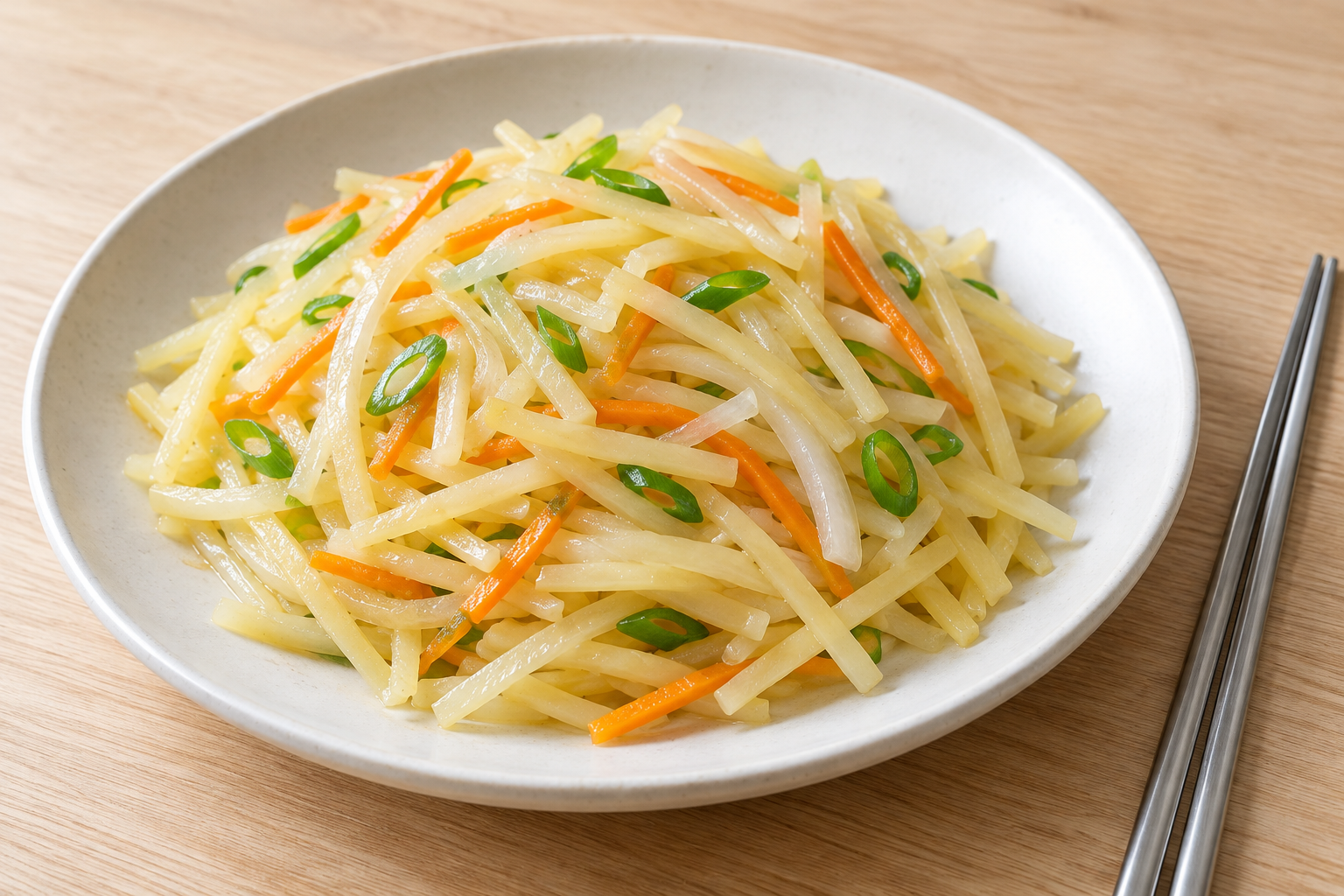
Gamjachae-bokkeum (감자채볶음) is a Korean side dish made with thin potato strips. Unlike soy-braised potato chunks, this version keeps the seasoning simple: oil and salt, with carrot and onion. If the outside browns while the middle stays firm, check the thickness of the strips and the amount in the skillet before adding more oil.
Yield: 2–3 small side-dish servings. Estimated time: about 15 minutes preparation and 7–10 minutes cooking. Base quantity: 300g peeled and trimmed potato. Timing varies with the cut, pan and heat; a fully tender center matters more than the minute count.
This is a measured cooking guide, not a personal cooking or tasting review. All four images are AI-generated process illustrations. They do not document an actual cooking session or establish exact quantities or doneness.
Ingredients · Method · Troubleshooting · 한국어 레시피 보기 →
Ingredients for a 300g potato batch
- 300g potato, weighed after peeling and trimming
- 40g carrot
- 50g onion
- 15mL neutral cooking oil, 1 measured tablespoon
- 2g fine salt in total: 1.5g initially, with 0.5g reserved for the finish
- Optional: 5g finely sliced scallion
- Only if needed: 15–30mL water, added in small amounts if the pan dries before the centers cook
Potatoes differ greatly in size, so use their prepared weight rather than a fixed number of potatoes. Weigh the salt when possible: different crystal sizes do not occupy a teaspoon in the same way. You may not need all the reserved salt, particularly if serving with other seasoned dishes. This formula does not include ham, soy sauce, oyster sauce or sesame oil; adding them changes the seasoning balance and possibly the allergen information.

Choose a wide skillet and a safe cutting setup
Have a skillet, spatula, sharp knife, stable cutting board, colander and clean kitchen paper ready. A skillet around 26–28cm wide is a starting point for this batch, but the usable flat surface matters more than its advertised diameter. You should be able to spread the strips fairly thinly. If they form a deep pile, cook in two batches instead of trying to compensate with high heat.
For hand cutting, slice a thin piece from one side of the potato and rest the flat face on the board. Keep your fingertips tucked away from the blade. A mandoline needs its hand guard; stop before the remaining piece becomes too small to hold safely. Even strips are more useful than exceptionally fine strips that vary in thickness.
1. Cut the vegetables into even strips
Wash hands and equipment. Rinse the potatoes under running water before peeling, without soap or detergent. Peel, trim and weigh 300g. Cut slices roughly 3mm thick, then stack a manageable number and cut into strips about 3mm wide. Aim for lengths around 5cm, shortening a large potato first if necessary.
Cut the carrot a little thinner, about 2mm, and thinly slice the onion. Split any unusually thick potato strips again. A few very thin slivers will cook and break before thick pieces are ready, so reducing that variation is more helpful than simply extending the cooking time for the entire pan.

2. Rinse away surface starch, then drain well
Place only the potato strips in a colander and rinse with cold water to remove the cloudy surface starch. If they cling together heavily, a brief soak of about 5 minutes followed by another rinse is an option. This is a handling step to reduce surface sticking, not a method that removes all potato starch or makes a nutritional claim about the finished dish.
Shake the colander and blot the strips with clean kitchen paper until they are no longer dripping. Water carried into hot oil can splatter and cool the pan sharply. Keep the onion separate rather than soaking all the vegetables together. Prepare the strips for this cooking session rather than treating this short soak as a storage method.
3. Start with potato and carrot, then add onion
Warm the skillet over medium heat and add 15mL oil. Do not let the oil smoke. Add the drained potato and carrot, spread them across the base and cook for about 3–4 minutes. Sprinkle the initial 1.5g salt evenly. Turn the strips gently with the spatula, changing which surfaces touch the pan instead of aggressively stirring without a pause.
Add the onion and cook for another 3–5 minutes as a starting range. Lower the heat if the edges brown rapidly, and spread out any areas that have piled up. The aim is a cooked potato side dish, rather than a dark, crisp French-fry finish. Constant high heat can color the outside without solving a firm center.

4. Check the thickest strip and finish the seasoning
Remove one of the thickest potato strips and allow it to cool briefly before pressing or tasting it. It should be tender through the middle, without a hard, raw-potato core. A translucent-looking outer surface alone is not a reliable endpoint. If the center is still firm, continue gently and check another thick strip before serving.
If the pan is dry and the outside is coloring too quickly, carefully add 15mL water at the edge of the pan, reduce the heat and cover briefly to help the center cook. Watch for hot oil and steam. Check the texture, adding a further 15mL only if necessary. Uncover at the end so remaining moisture can evaporate. Water is a corrective tool here, rather than a large fixed addition intended to boil the strips.
Once the potato is fully cooked, taste and add only as much of the reserved 0.5g salt as needed. If using scallion, fold it in and cook briefly before turning off the heat. Transfer to a serving plate and offer small portions with rice. The total 2g salt is a starting formula, not a promise of an identical perceived saltiness with every product and meal.

Troubleshoot sticking, firm centers and broken strips
- The strips stick together: Check whether the surface starch was rinsed off, the pan was warmed, and the vegetables are crowded. Avoid crushing them while trying to pull them apart. Adjust the heat and turn gently when the strips release from the base.
- Brown outside, hard inside: Look for thick pieces or excessive heat. Lower the heat and use the small-water, brief-cover method above, then check the center again. For the next batch, split oversized strips before cooking.
- Too much liquid: The potatoes may have carried excess rinse water, or the onion and overall batch may be too large for the pan. Uncover and spread out the vegetables to evaporate moisture, without repeatedly mashing strips that are already cooked.
- Strips crumble: Very fine cuts, prolonged cooking and rough turning can all contribute. Use a more uniform cut next time and stop when cooked. More stirring cannot restore strips that have already broken.
- Too salty: Serve a smaller portion with unseasoned rice and reduce the finishing salt in the next batch. Adding raw potato to dilute the seasoning requires cooking that new potato fully as well.
Half batches, double batches and substitutions
Half batch: 150g potato, 20g carrot, 25g onion, 7.5mL oil and 1g salt in total. Double batch: 600g potato, 80g carrot, 100g onion, 30mL oil and 4g salt in total. In either case, reserve some salt until the cooked vegetables can be tasted. Water is optional, so do not automatically double a water allowance; use a small amount only if the pan and potato centers need it.
Do not heap a double batch into the same skillet and simply double the time. Cooking two separate batches keeps the vegetables closer to the original depth, with a separate doneness check for each. Carrot can be omitted, but replacing it with more potato changes the pan load. Ham, sausage, seasoned sauces and sesame-based additions are variations with their own seasoning and label checks, rather than required ingredients for this version.
Serving, cooling and reheating
Set aside the amount for the meal and divide leftovers into clean, shallow containers. Following the UK Food Standards Agency’s general leftovers guidance, cool promptly and refrigerate within 1–2 hours, keep the refrigerator at 0–5°C, and use within 48 hours or freeze. This is general food-handling advice, not a tested shelf life for this particular potato recipe, and it cannot make improperly stored food safe.
Reheat only the amount you will eat, until hot throughout. For a dry skillet, a little water can help; for a microwave, use suitable cookware and stir partway through so the center also heats. Do not rely on smell alone to decide whether food left out for a long time can be stored again. Check the actual oil and other ingredient labels for allergens and cross-contact information, especially when making substitutions.
Sources and other Korean side dishes
Maangchi’s gamjachae-bokkeum was consulted for the dish’s basic form and the surface-starch rinse. This article gives a separate 300g potato formula with carrot and onion; it does not reproduce that source’s ingredient quantities, personal account or wording. Produce preparation follows FDA guidance on handling produce, and storage guidance is from the UK FSA guide to chilling and freezing food. Sources checked: October 29, 2026.
For another skillet side, see hobak-bokkeum, Korean zucchini. For a contrasting radish dish, try musaengchae. Browse K-Food · 한국어 레시피 보기 →
답글 남기기