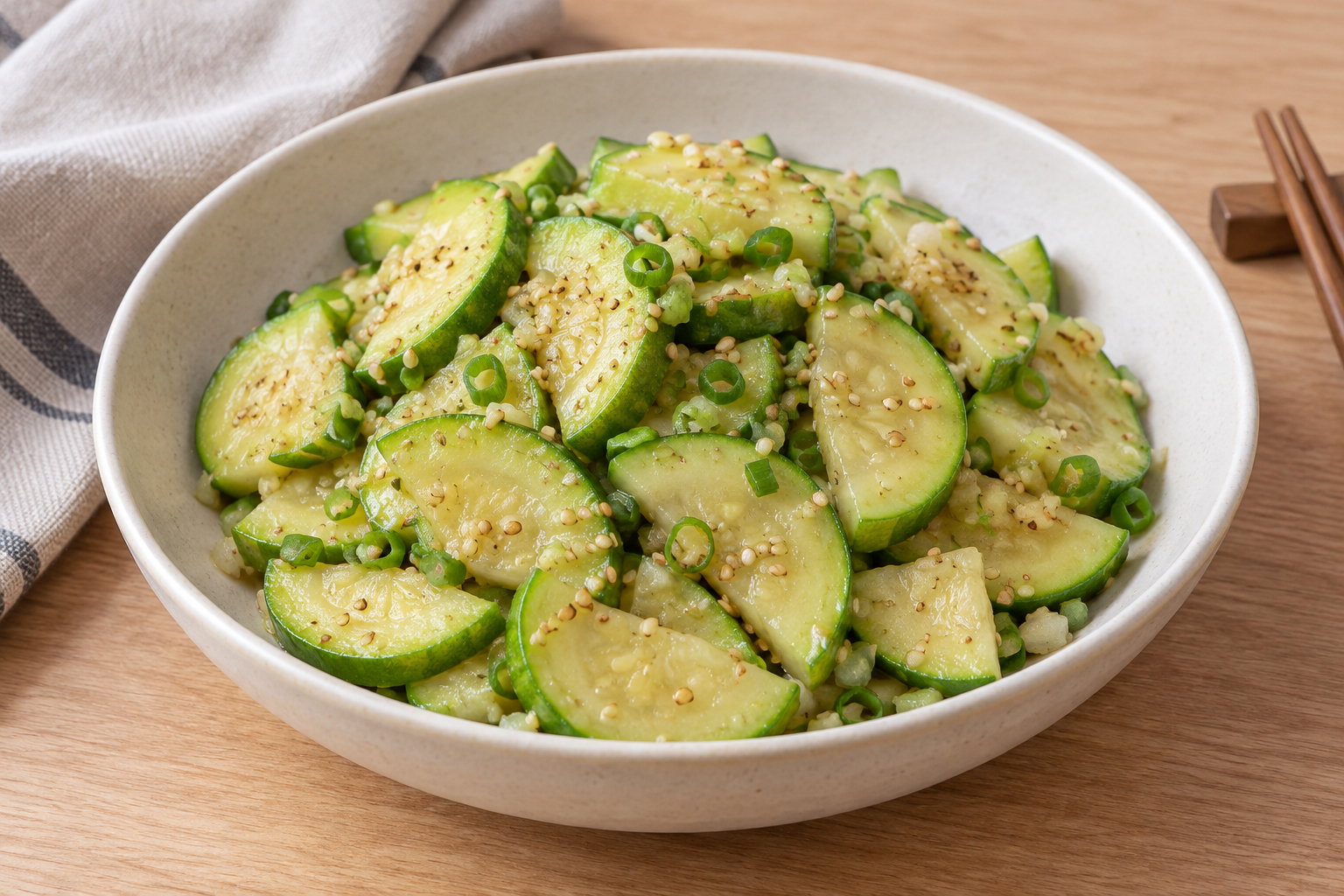
Hobak bokkeum (애호박볶음) is a mild Korean side dish of zucchini cooked with garlic. This small batch uses salt rather than the salted shrimp found in some versions. Start with 300g of trimmed zucchini and adjust the seasoning at the end.
Yield: 2–3 small side-dish servings · Estimated time: 15–20 minutes including preparation. A tablespoon means 15mL and a teaspoon 5mL. These quantities are an adjustable starting formula, not a personally cooked-and-tested review. All four images are AI-generated illustrations.
Ingredients for 300g of zucchini

- Zucchini — 300g / about 10.6oz after trimming
- Minced garlic — 5g, about 1 teaspoon
- Chopped scallion — 10g
- Neutral cooking oil — 10mL / 2 teaspoons
- Salt — Start with 1g; add small pinches at the end if needed
- Water — 15–30mL / 1–2 tablespoons, only as needed
- Toasted sesame oil — 2.5mL / 1/2 teaspoon
- Toasted sesame seeds — 1/2 teaspoon, optional
Choosing zucchini outside Korea
Korean aehobak usually has pale green skin. Regular green zucchini can also be used, although its skin and texture may differ. Weigh it after trimming; one zucchini is not a fixed amount. If a large specimen has a tough seed core or a very soft center, remove that part before weighing. Winter squash is not a direct substitute with the same cooking time. Salt crystal size varies, so weighing 1g is more repeatable than estimating a fraction of a spoon.
1. Wash and cut evenly
Wash the zucchini under running water and trim the ends. Cut into rounds about 5–6mm thick, or halve lengthwise first for half-moons if it is wide. Keep the thickness consistent. Prepare the garlic and scallion. Use clean hands and utensils; clean boards and knives after handling raw meat or fish before using them for vegetables.

2. Start in a roomy skillet
Warm the neutral oil in a 24–26cm / roughly 10-inch skillet over medium heat. Briefly stir the garlic without browning it, add the zucchini, then raise the heat to medium-high. Turn the pieces for 2–3 minutes. Lower the heat if the garlic browns quickly. If the pan is crowded with several layers, cook in batches rather than trying to evaporate all the liquid from a deep pile.

3. Season and check tenderness
Add the initial 1g of salt and stir. If the pan is dry while the zucchini remains firm, add 1 tablespoon of water around the edge and cook for another 1–3 minutes. Add a second tablespoon only if needed; skip it if the zucchini has already released liquid. Look for slightly translucent edges and pieces that yield to gentle pressure while keeping their shape. The clock is a guide: thickness, zucchini variety and heat change the timing.
4. Finish with scallion and sesame oil
Stir in the scallion for about 30 seconds, turn off the heat, and add sesame oil and optional sesame seeds. Let a small piece cool slightly before tasting. Add salt in small pinches only if needed. Transfer to a serving dish so the hot skillet does not keep softening the pieces.

Troubleshooting and scaling
Too much liquid? Stop adding water and cook briefly uncovered. If the zucchini is already tender, lift it out rather than overcooking it until the pan is completely dry. Too salty? Add some separately cooked, unsalted zucchini. Water that is later boiled away will not permanently fix excess salt. Too soft? Next time use even slices, less added water and a shorter cooking time.
For 600g of trimmed zucchini, start with 10g garlic, 20g scallion and 20mL neutral oil. Hold back part of the doubled salt and water until you see what the vegetables need. Use a wider skillet or two batches. Do not add soy sauce or salted shrimp on top of the full salt amount: those create a different seasoning formula.
Allergens and leftovers
Check ingredient and allergy labels, especially for sesame oil and sesame seeds. If avoiding sesame, omit both and check the remaining ingredients too. The recipe does not call for salted shrimp, but that does not replace checking the actual products you use.
Divide leftovers into small, clean containers to cool and refrigerate within 1–2 hours. The UK Food Standards Agency gives general guidance to keep the fridge at 0–5°C and eat leftovers within 48 hours. Consider ingredient use-by dates and handling conditions as well; reheating is not a guarantee that food left out too long is safe.
References and more Korean side dishes
Korean Bapsang — Hobak Bokkeum was consulted for the basic cooking technique and zucchini choices; the 300g salt-seasoned formula above is this article’s starting guide. See the UK Food Standards Agency’s chilling and storage guidance for general leftover advice. Sources checked October 18, 2026.
For a cool side dish alongside it, try Oi Muchim: Korean Cucumber Salad. Browse all K-Food recipes · 한국어 레시피 보기 →
답글 남기기