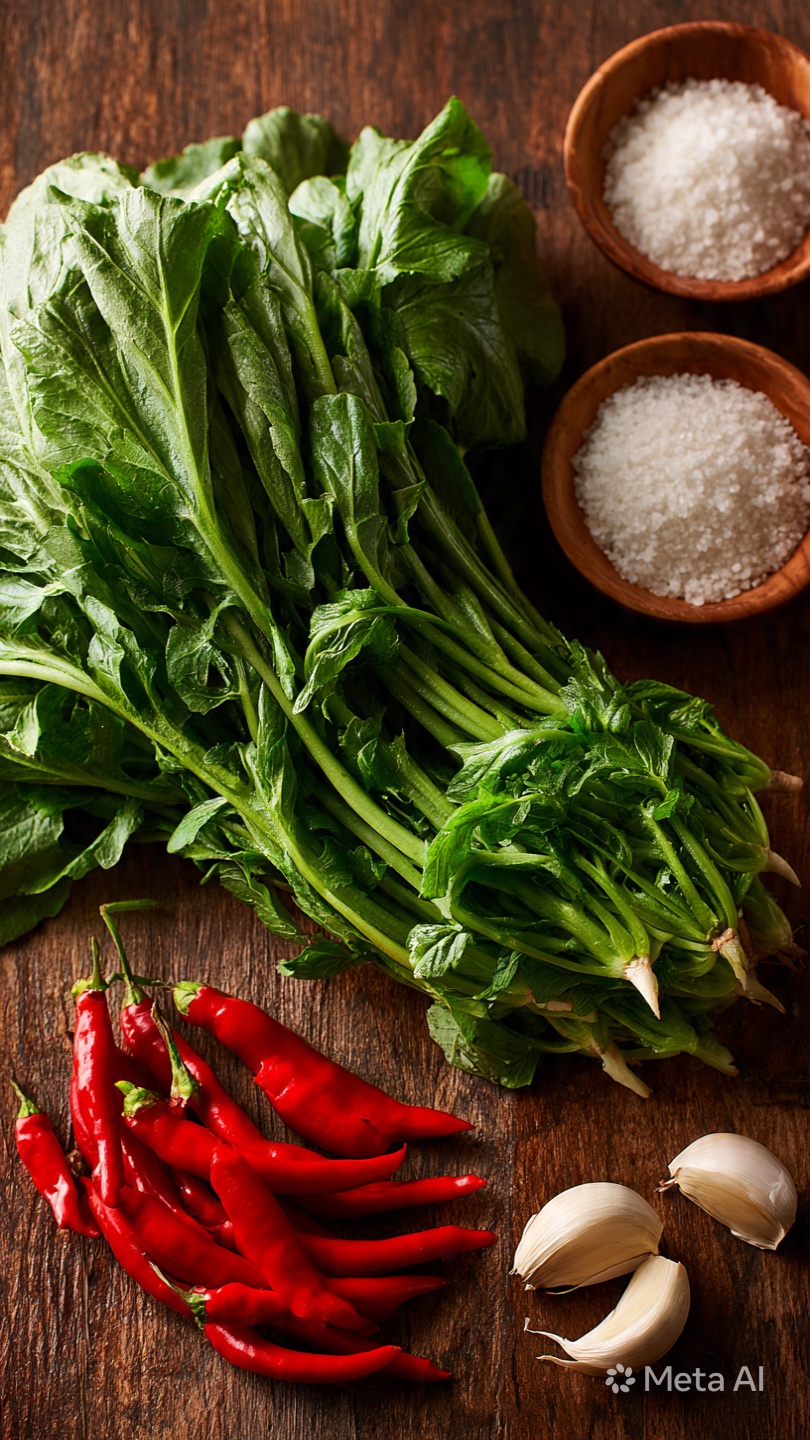
On a summer table, few side dishes revive the appetite faster than yeolmu kimchi. Mix it with warm rice, gochujang, and sesame oil, or place it on cold noodles, and it instantly becomes a refreshing meal. Because young summer radish leaves and stems are tender, the key is to handle them gently so they stay crisp without a grassy smell.
Yeolmu Kimchi Recipe Guide: How to Make It Crisp, Cool, and Fresh
Yeolmu kimchi is made by salting young summer radish greens and mixing them with red pepper, garlic, fish sauce, salted shrimp, and a cooled flour paste. The most important points are washing gently, turning the greens only once while salting, and using fully cooled paste before mixing.

Yeolmu kimchi uses the small radish root, tender stems, and leaves together. The greens contain plenty of moisture and have a refreshing bite, but if they are rubbed too hard or salted too long, the texture can become limp and the flavor can turn grassy.
This recipe is based on one bunch of yeolmu, about 1 to 1.2 kg. In hot weather, fermentation moves quickly, so it is safer to let the kimchi sit at room temperature for about half a day to one day, then move it to the refrigerator for slower aging.

Basic Information
Essential Ingredients
One bunch of yeolmu usually makes a comfortable home-size batch. If your bunch is larger or smaller, adjust the salt and seasoning by about 10–20 percent.
| Ingredient | Amount | Role |
|---|---|---|
| Yeolmu | 1 bunch, about 1–1.2 kg | Main ingredient with crisp stems and refreshing leaves |
| Coarse salt | 1 cup | For salting and keeping the texture crisp |
| Water | 1 L | For the brine |
| Scallions | One handful | Adds aroma and texture |
| Onion | 1/2 onion | Adds sweetness and crunch |
| Sesame seeds | Generous amount | Nutty finish |
Flour Paste and Seasoning
Flour Paste
- 2 cups water
- 2 tablespoons flour or glutinous rice flour
The paste helps the seasoning cling to the greens and supports smooth fermentation. Stir over low heat until lightly thickened, then cool completely.
Blend Together
- 10–15 red peppers
- 1 onion
- 15 garlic cloves
- 1 small piece ginger
- 2 tablespoons salted shrimp
- 3 tablespoons maesil syrup
- 100 ml pear or apple juice
Additional Seasoning
- 5 tablespoons gochugaru
- 4 tablespoons anchovy or sand-lance fish sauce
- Sesame seeds
How to Prep Yeolmu Without Grassy Smell
Clean the root end gently
Scrape away dirt at the root with a knife and remove yellowed leaves.
Cut into 5–6 cm pieces
This length is easy to eat and less likely to bruise while mixing.
Shake in water, do not rub
Place the greens in a large bowl of water and shake gently to remove dirt.
Do not over-rinse
Two or three gentle rinses are enough. Long soaking can weaken the aroma and texture.
Salting Process
Lay down a handful of greens, sprinkle coarse salt, and repeat so the seasoning spreads evenly.
This prevents only the bottom layer from becoming overly salty.
After 30 minutes, gently lift the bottom greens upward. Avoid squeezing or kneading.
A single gentle rinse is usually enough to balance the salt.
Good draining keeps the seasoning from becoming watery.
Making the Paste
Mix flour into cold water first.
Stir before turning on the heat so there are no lumps.
Cook gently over low heat.
The paste should be lightly thickened, not overly dense.
Cool completely before adding.
Hot paste can soften the greens and dull the flavor.
Making the Seasoning
Their moisture helps garlic and ginger blend more smoothly.
These balance aroma, sweetness, and umami.
Let it rest for about 10 minutes so the chili powder blooms.
The flavor deepens as the kimchi ferments, so start slightly mild.
How to Mix
Lift and toss, do not knead
The most common mistake is using too much force. Spread your fingers and lift the greens from the bottom so the seasoning coats them without bruising.
Add scallions and onion at the end
Mix them in lightly so the onions do not release too much water.
Pack gently into a container
Press the surface lightly to reduce air pockets without crushing the greens.
Fermentation and Storage
| Stage | Time | What to Check |
|---|---|---|
| Room temperature | 12–24 hours in a cool spot | Small bubbles and a mild sour aroma begin |
| Refrigerated aging | 2–3 days | The broth becomes cool and refreshing |
| Best eating window | 2–5 days after making | Good for rice bowls and noodles |
| Longer storage | Refrigerated | Use clean tongs and reduce air exposure |
Common Problems and Fixes
Grassy smell
The greens were likely rubbed or mixed too strongly. Handle them gently next time.
Tough texture
The greens may have been too mature or salted too long. Keep the salting time around one hour.
Weak broth flavor
Drain better after salting and adjust with fish sauce one tablespoon at a time.
Too sour too fast
Move it to the refrigerator earlier once bubbles and sour aroma appear.
How to Enjoy It
Yeolmu bibimbap
Mix rice with yeolmu kimchi, gochujang, sesame oil, and seaweed flakes. Add a fried egg for protein.
Spicy cold noodles
Top chilled noodles with yeolmu kimchi, gochujang sauce, and sesame oil.
Cold noodle soup
When the kimchi becomes pleasantly sour, use a little of the broth with cold noodle stock.
Important Notes
Check shellfish allergies.
Salted shrimp may be an issue for people with shellfish allergies. Use fish sauce or salt instead if needed.
Use glutinous rice flour if wheat is difficult.
Keep the paste thin and fully cooled.
Keep summer room-temperature fermentation short.
Hot weather speeds fermentation, so check after about 12 hours.
FAQ
Q. How long should yeolmu be salted?
A. About one hour for one bunch, with one gentle turn halfway through.
Q. Why does yeolmu kimchi smell grassy?
A. It is often from rubbing or kneading the greens too hard.
Q. Can I use glutinous rice paste instead of flour paste?
A. Yes. Both work as long as the paste is fully cooled.
Q. When should I refrigerate it?
A. When it starts to smell lightly sour and small bubbles appear.
Q. What if it is too salty?
A. Let it ferment and dilute the broth slightly if needed; next time, rinse once more or reduce fish sauce.
Closing
Yeolmu kimchi becomes crisp and refreshing when the greens are washed gently, salted for the right amount of time, and mixed without force. The cooled flour paste helps the seasoning cling evenly while keeping the flavor clean.
After a short room-temperature fermentation, refrigerate it and enjoy the cool, tangy flavor with rice or noodles. It is one of the most useful summer kimchi recipes to keep on hand.